Dubai property search: find the right project and phase
Use this Dubai property search to find a project by name, separate similar releases and match the result to DLD records before reserving a home.
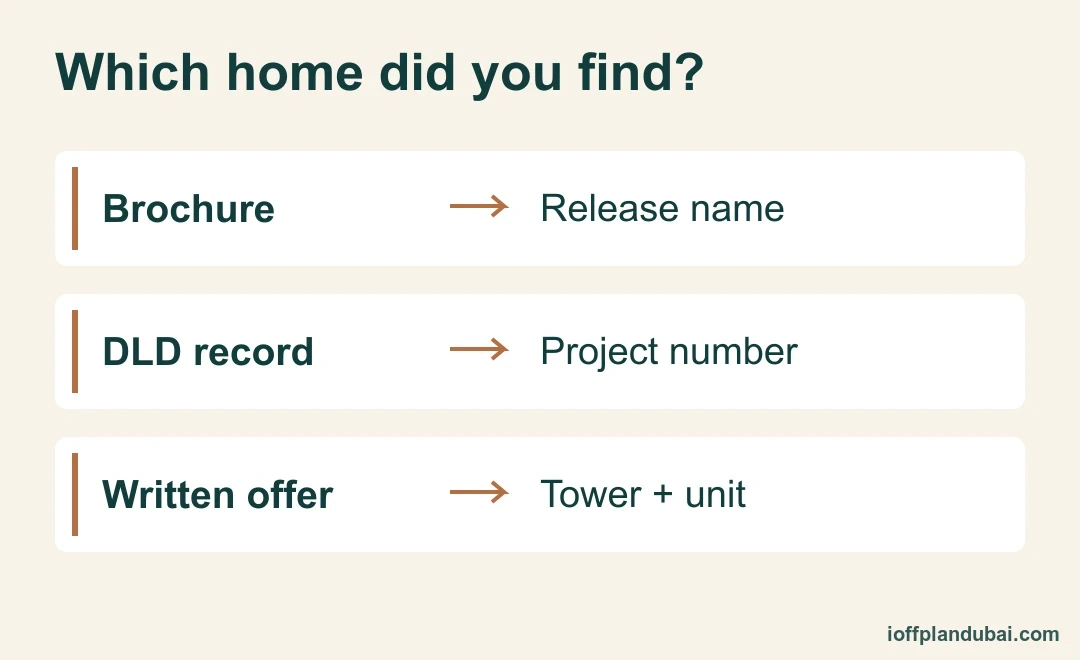
Start your Dubai property search with the project name on your offer, including the tower or phase number. Search the site for the project guide, then use the project number to check the match with Dubai Land Department (DLD) before you pay. Updated 18 November 2026.
How do I use the Dubai property search?
Type the part of the name you recognise. For Palm Beach Tower 3, try “Palm Beach” first. Open the result that names the third tower and check the heading inside. If you already know the name, you can go straight to the Palm Beach Towers 3 buyer guide. Keep the number when you save or send the link.
The search covers published guides, projects and tools on this site. It looks for the words you enter in a page’s title, description and address. A long sentence can hide the page you want because every word needs a match. Drop “apartments for sale near” and keep the part you would expect to see on the cover of the brochure.
| What you have | What to look up | What to keep from the result |
|---|---|---|
| A brochure with a project name | The name, then the phase or tower | The developer’s spelling and the release covered |
| A page for a whole community | The named building or collection within it | The location plan showing where the home sits |
| A reservation form with a project number | The number in DLD’s project enquiry | The matching registered name, developer and date of the record |
| Two offers for similar apartments | Each building separately, then each numbered unit | A plan and written terms for each home |
If you just want to browse, the comparison of new off-plan projects sets several named developments side by side. If you have a reservation form open, skip the comparison. What you need to know is whether its project, tower and unit agree with the documents you were sent.
Which result is the right one when the names look alike?
Take ELO. The old English search page included ELO at DAMAC Hills 2. Today a search for “ELO” can also turn up the later releases. On its ELO 3 project page, DAMAC names ELO and ELO 2 separately and places ELO 3 in DAMAC Hills 2, Dubailand. The “2” in the community name stays even when the release is ELO 3.
Suppose the heading on your offer reads “ELO 3, DAMAC Hills 2”. Keep “ELO 3” together when you search. Open the ELO 3 guide and look at the release named on the plan. If the attached plan just says “ELO”, ask the person who sent it to point out the building reference on the drawing. Keep the original ELO guide open only if you are deliberately comparing the two.
A change from singular to plural can be a harmless spelling difference. A different release number deserves a document. Ask for the page that connects the two names, such as a developer identification letter or a building schedule in the agreement. Keep both spellings in your notes so the next person reading the file can repeat your search.
What if the result names an amenity or a whole neighbourhood?
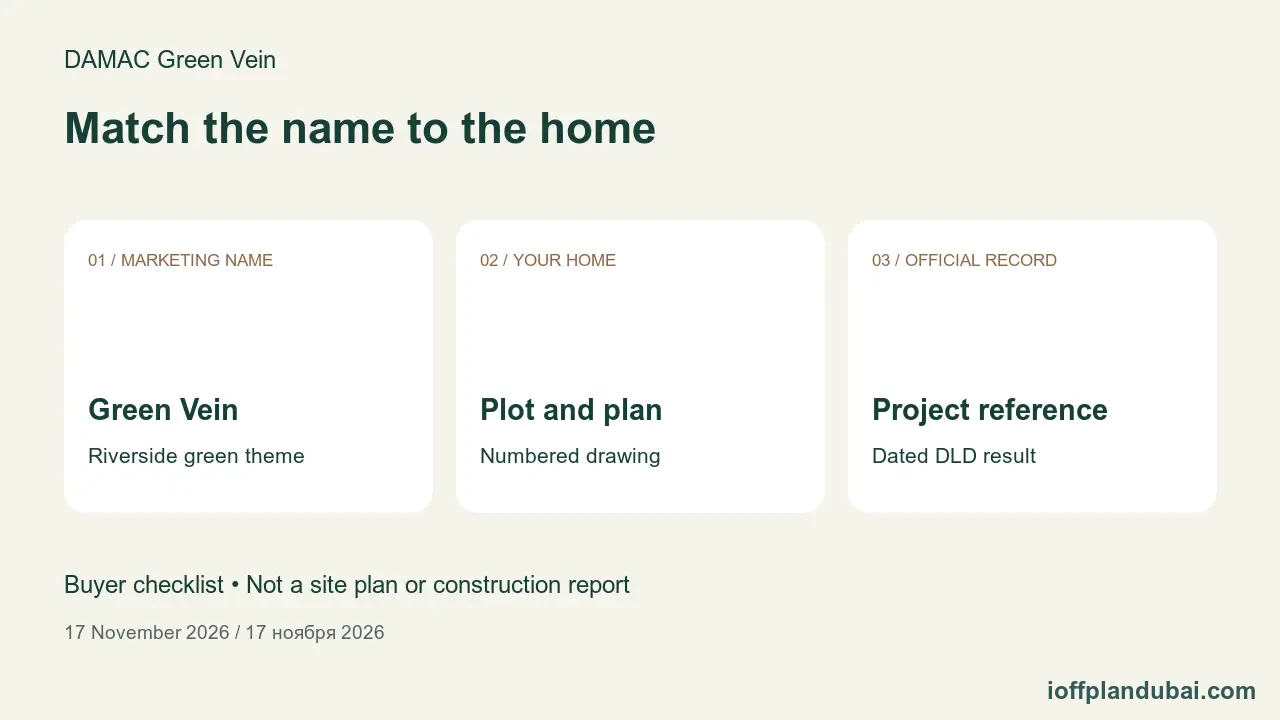
The old search page put DAMAC Riverside, Green Vein and Water Vein beside one another. Three cards on a screen can look like three buildings. Before comparing floor plans, ask what each name labels on the developer’s plan. A name printed across a landscaped area tells you little about which house has access to it.
Use the Green Vein guide if that is the wording you have. On your copy of the plan, circle the home and the entrance to the amenity. Ask which path connects them and whether it will be open when the home is handed over. A community-level search result can help you find the drawing. The drawing and the terms for that particular home answer the access question.
For a branded residence, keep the district in the query until you recognise the address. A hotel name on its own can lead you to room bookings, a beach club or a different residence. Look for the developer named in the proposed agreement. If a brochure cover and a project page use different branding, compare the plot, district and building before borrowing any price or delivery information.
How do I match a search result to DLD?
Open DLD’s Project Status Enquiry. Its instructions allow a search by land number, project number or project name. Start with the number if you have it in writing. Read back the name on the result to the developer, including any suffix, then ask which tower and phase the registration covers.
Write down the date you opened the result and any inspection date it gives. Those dates do different jobs. You might open the service today and find a much earlier inspection. Pair the percentage with the inspection it belongs to, and label any newer photographs with the publisher and the date on which they were taken, if known. A developer’s photograph cannot supply a later official inspection date.
If the name returns several records, leave the percentage blank until you can identify the right one. Ask the developer for the registered project name, number and land reference together. Repeat the enquiry using that number. If the result still points to another development, take the conflicting names and numbers to DLD before relying on either one.
Which figures belong to the project and which belong to the apartment?
On DLD’s real estate data page, the project table includes the developer, project number, inspection date and percentage completed. The unit table has fields for the building, floor, unit number and balcony area. Choose the table that answers your question. Finding a project by name won't tell you whether the balcony on a particular plan belongs wholly to the apartment.
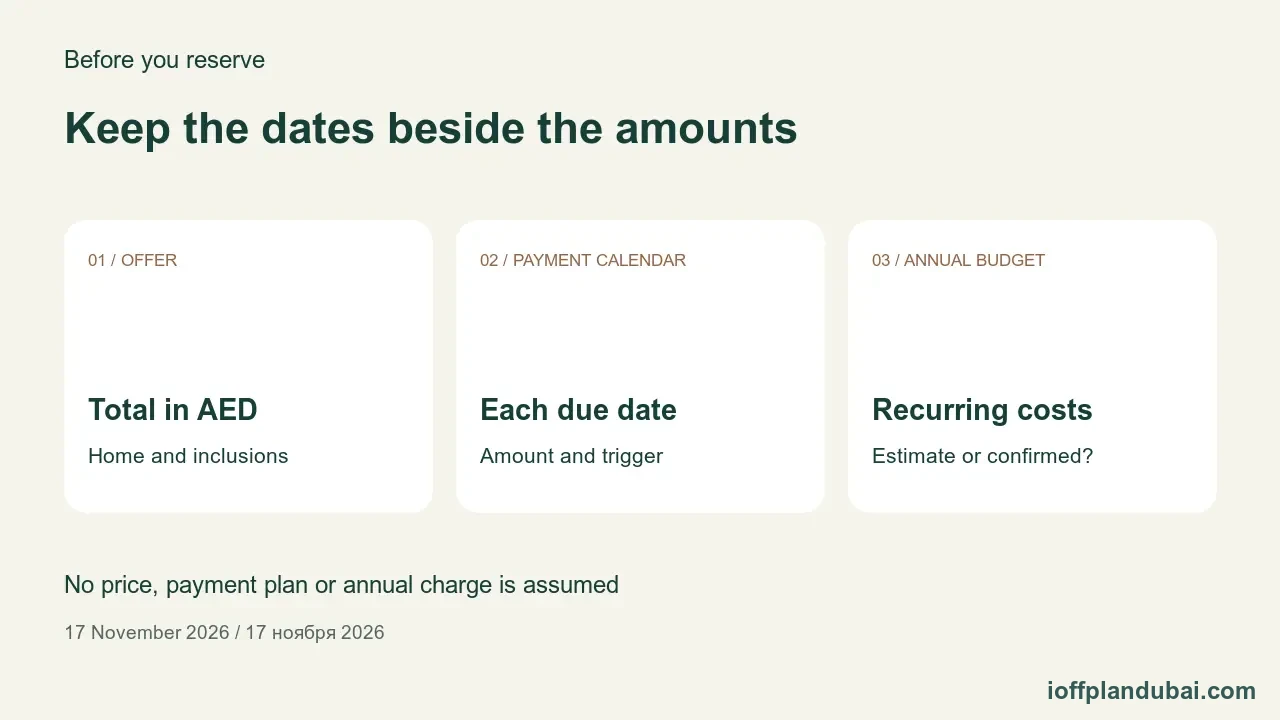
For a price comparison, write the amount and the area side by side with their units. In a hypothetical offer, AED 2,000,000 divided by 100 square metres gives AED 20,000 per square metre. If the 100 includes a 15-square-metre terrace, the same amount divided by the remaining 85 square metres is about AED 23,529 per square metre. You haven’t found a price change. You’ve changed the area you divided by.
Only put two prices in the same column once you know what each area includes. A recorded transaction concerns the property and date in that record. A starting price on a launch page and a seller’s written price for an identified unit answer different questions. For a home you intend to reserve, use a dated offer that names the apartment and says how long the terms stand.
What should I save before I close the results?
Keep one short note per candidate. At the top, put the building and unit you would actually buy. Below that, paste the guide address and the developer’s page. For DLD, keep the registered project reference and the date you checked it. A share link may take your partner back to a blank enquiry form. The reference lets them repeat the search.
Use the last line for the question that still separates this home from the other one. It might read “Plan gives total area only. Waiting for the internal and terrace split.” For a second home it might be “Tower matches. Waiting for the signed payment schedule.” Send that last line with the document you want the developer to check.
If the seller sends a revised plan, keep its revision date with the quoted price. Compare the unit number, floor and plan orientation before replacing the old figure. A mirrored layout can have the same area and bedroom count as the one you liked. Look for the entrance, balcony and neighbouring unit on the floor plate to see which way this one faces.
FAQ
Why are there no search results for my apartment number?
The site searches published pages. An individual apartment may never have been named in a guide. Try the building name alone. Once you have found the development, use the unit schedule and floor plan supplied for your offer to identify the apartment.
Does an old result mean a home is available?
The old page named projects including Shams Townhouses, Como Residences and Palm Beach Tower 3. Those names can help you recover a bookmark. Availability needs a fresh answer from the party offering the home. Ask them to identify the unit in writing and say when the offer expires.
Which information should I ask for before a reservation payment?
Ask for the recipient and payment purpose in writing, the identified home, the amount due in AED and the conditions for return or retention of the money. Read the payment instructions against the registered project details with the developer through its official contact route. If the reservation form names another phase, ask for a corrected copy before paying.
What if I only remember part of a name in another language?
Try the distinctive word in the language of the brochure, then its English spelling. Search one version at a time. Keep numbers exactly as printed. Once you find the guide, send its full address and the relevant source to whoever is checking the purchase with you.
Sources
- Dubai Land Department — Project Status Enquiry — dubailand.gov.ae · checked
Lists project name, project number and land number as lookup inputs. Completion is measured in percent. No individual result is reported here.
- Dubai Land Department — Real Estate Data — dubailand.gov.ae · checked
Project, transaction, building and unit tables identify different records. Project progress uses percent and property size uses square metres where indicated.
- DAMAC Properties — ELO 3 — preprod.damacproperties.com · checked
Developer preproduction page names ELO, ELO 2 and ELO 3 and places ELO 3 at DAMAC Hills 2 in Dubailand. Release names only.
Next stepDue diligence →
More in Due diligence
Start here: Due diligence
- Property exchange in Dubai: who qualifies and what it costs
- What Should a Dubai Buyer Check Before Signing RERA Form B?
- Real Estate Scams in Dubai: How to Check and Report (2026)
- Can You Sell Off Plan Property Before Completion in Dubai?
- Terms and conditions for using our Dubai property guides
- Dubai Real Estate Escrow Requirements (Buyer Checklist)