The Residences Downtown Dubai: 2026 resale checklist
The Residences in Downtown Dubai has nine towers. Check the exact apartment, title, terrace, service charges and possession terms before paying.
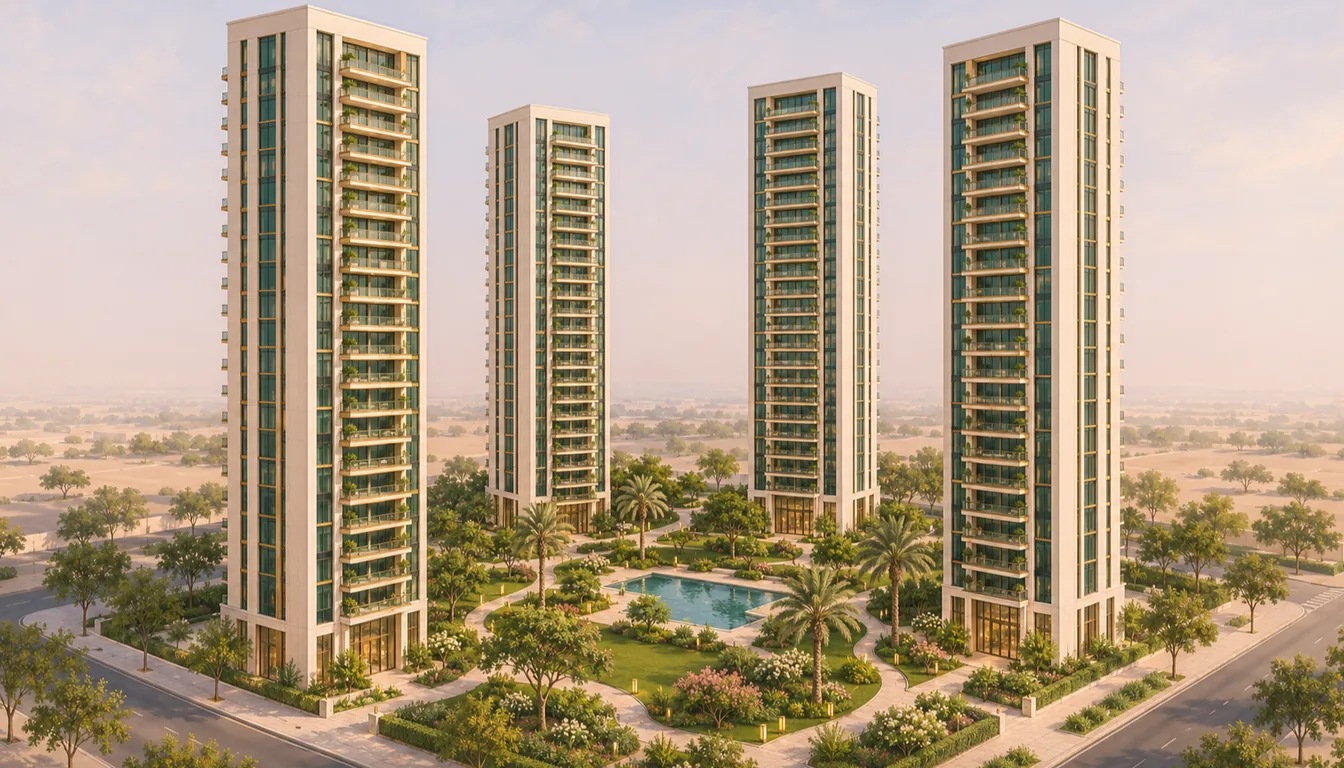
The Residences is Emaar's nine-tower development around Burj Lake in Downtown Dubai. As checked on 17 November 2026, Emaar Community Management describes apartments, penthouses and villas there. For a purchase, get the exact tower and apartment number, then check ownership, condition, annual bills and the date you can take possession.
Where is The Residences in Downtown Dubai?
Emaar Community Management identifies the development as The Residences I and II. Its official community page places the buildings around Burj Lake and describes retail and cafés on a connecting podium. Keep the tower number with every document you request.
Ask the seller to mark the residential entrance and vehicle access on a map. Visit from the direction you'll usually travel. Then walk from the parking space to the lift and apartment door. That route matters when you're carrying shopping, moving furniture or bringing children home.
Check the view from the actual rooms. A photograph taken elsewhere in the development won't tell you what you can see while sitting in your living room. Ask for any view description used in the offer to identify the room and direction it refers to.
The Emaar developer guide helps with broader company research. For this transaction, keep the current owner's identity and authority to sell beside the apartment's ownership documents.
Which apartment, penthouse or villa are you buying?
Management lists one- to four-bedroom apartments alongside penthouses and villas. Those categories describe the development. Request the exact home's plan, measurements and inclusions before comparing it with another offer.
| Check | Ask the seller to provide |
|---|---|
| Tower and apartment | The same references on the ownership record, plan and sale agreement |
| Indoor space | Dimensioned plan and a definition of the quoted area |
| Balcony or terrace | Separate area, boundary and applicable use rules |
| Parking | Space identification and the document supporting its use |
| Included contents | Written inventory of furniture, appliances and other agreed items |
Measure the rooms you care about. A bedroom count won't tell you whether a desk fits beside the bed or whether a dining table leaves enough room to pass. Take measurements during the viewing and compare them with the supplied plan.
Keep square feet and square metres consistent. The built-up area guide explains why area labels need checking. If two quotations use different definitions, ask for matching figures before calculating a price per unit of area.
How do you check ownership before paying?
Ask for the current title document and the seller's identification through an appropriate private channel. Have your independent conveyancer or legal adviser check that the person signing has authority for this sale, including any power of attorney used.
DLD's Verify Title Deed service lets customers check the validity of a DLD-issued ownership certificate. Use it with the actual document. Save the verification date with the result and ask DLD to clarify any mismatch.
A valid certificate still leaves transaction questions to resolve. Ask your adviser to confirm outstanding finance, any required approvals, and the arrangements for clearing obligations at transfer. The payment sequence should fit the facts of the apartment and the parties involved.
If a document uses a building name you don't recognise, ask for the written connection to the tower you're viewing. Keep that explanation with the plan. Avoid resolving the difference by choosing whichever spelling looks closest.
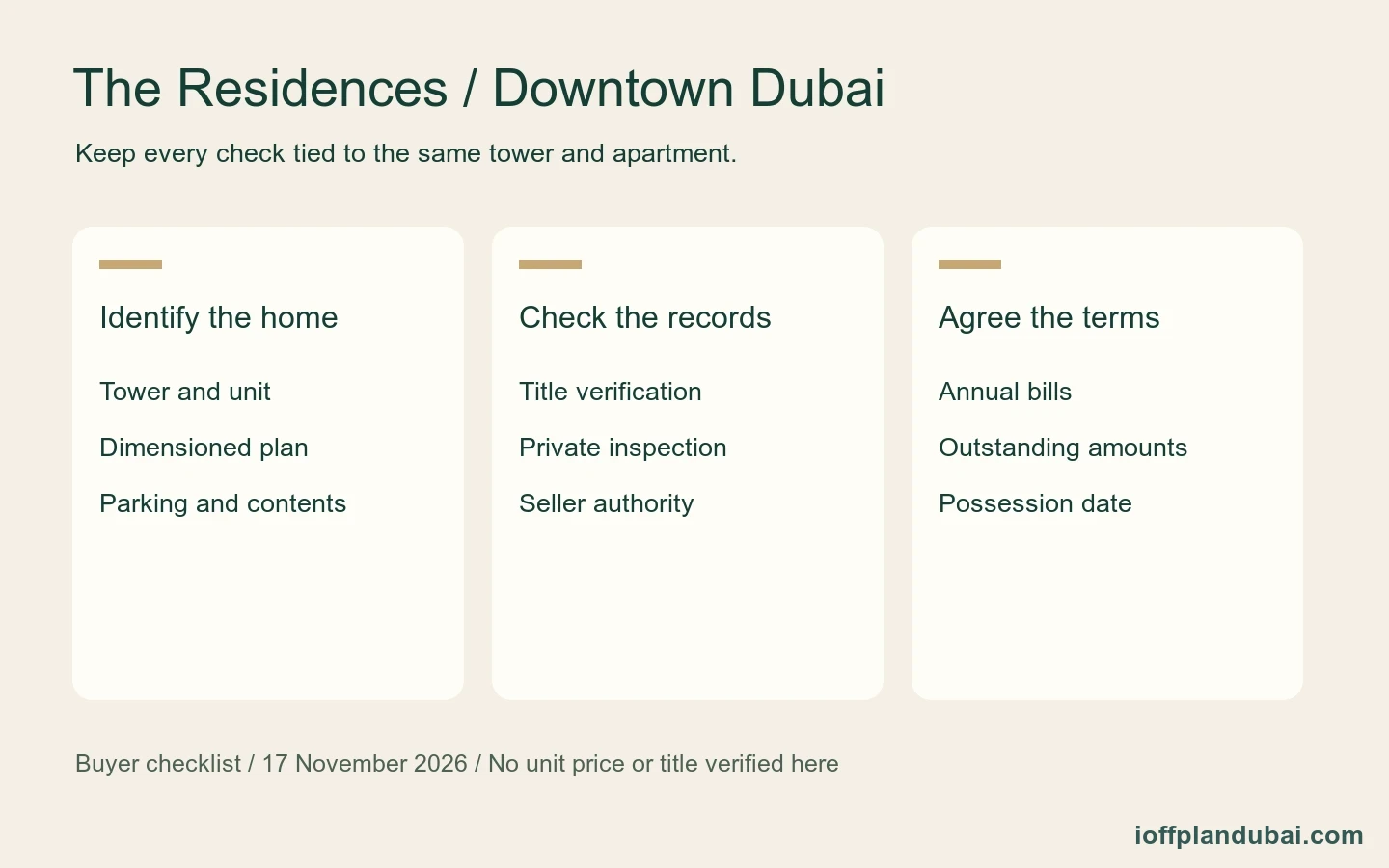
Read the sale and purchase agreement checklist with the draft agreement open. Mark the apartment references, deposit conditions, transfer arrangements, possession date and what happens if an agreed condition remains unmet.
What should you inspect inside the home?
Arrange access to the apartment, its parking space and the facilities that matter to you. Ask whether utilities will be operating during the inspection. If a system can't be tested, record that fact and agree how it will be checked before completion.
Start with the rooms you'll use most. Check cooling, windows, doors, visible plumbing and installed appliances. Look at the balcony or terrace surface and drainage. For technical concerns, commission an independent inspection and ask for photographs tied to locations within the home.
Record each issue in a simple table. Include the room, the observation, who will investigate, the agreed action and the evidence needed to close it. A vague promise to “fix everything” gives you little to check at the final walkthrough.
Ask about alterations. If the apartment differs from the supplied plan, request the relevant approvals and have your adviser assess the documents. Pay particular attention to enclosed outdoor areas, relocated plumbing and changes affecting building systems.
For the inspection sequence, use the pre-purchase property inspection guide. Keep the report private and share it with the people reviewing your purchase.
Which facilities can your household use?
Management's page lists swimming and children's pools, gym facilities, squash and badminton courts, children's play areas and shared indoor rooms. It also describes four parking levels, concierge and round-the-clock maintenance and security. Confirm current access arrangements directly with management.
Walk to the facilities you expect to use regularly. Ask which entrance serves your tower, whether bookings apply, and how guests or household members gain access. Check opening hours and any maintenance closures before deciding how the building fits your routine.
For a family, try the route from the apartment to the play area. For someone working from home, listen in the intended work room with the windows both open and closed. Visit at a time that resembles your normal day.
Ask how residents report maintenance issues and how access is arranged for a contractor. Get the current move-in requirements before booking movers. Save the management response with the possession timetable so everyone is working toward the same date.
How much are the service charges and running costs?
There is no verified current asking price or annual charge for a particular home in this article. Request the seller's latest bills, the relevant approved budget information and details of any outstanding amounts. Keep the budget year visible beside every figure.
Open the DLD Service Charge Index and match the project, use and year. Compare the result with the invoice and the area used for billing. Ask management to explain any difference before treating an estimate as your annual budget.
On your first-year cost sheet, give shared charges, utilities and private maintenance their own rows. Add documented amounts and mark anything awaiting a quotation. Record due dates beside annual totals.
Use the service-charge bill checklist to review the paperwork. Ask who settles outstanding charges and how the parties will account for payments that cover a period spanning the transfer date.
If you're comparing this home with an off-plan apartment, place both payment calendars beside each other. For the resale, establish transfer and possession requirements. For the off-plan offer, check its own registered project, payment schedule and delivery clause. Use dated documents for each home.
When can you move in or receive rent?
Ask whether the home is vacant, owner-occupied or tenanted. Request the documents supporting the answer and have your adviser check how the proposed sale handles occupation. Agree who supplies keys, access cards, remotes and parking permissions.
For a tenanted apartment, review the lease, rent collection records and deposit arrangements privately. Ask who receives payments covering periods after transfer and who takes responsibility for the tenant's deposit. Get those arrangements into the transaction documents.
If you need to move in by a particular date, tell your adviser before agreeing terms. Ask them to assess the proposed possession arrangements against that requirement. A viewing and a seller's intended moving date leave further paperwork to settle.
Make a final inventory appointment close to the agreed handover. Compare the home with the signed contents list and inspection actions. Record meter readings where applicable and ask how the relevant accounts and access permissions will be changed.
What should your offer include?
Keep the offer specific to this apartment. State the agreed contents, conditions requiring verification, intended transfer timetable and possession arrangement. Have your adviser explain when any deposit becomes payable and what the written terms say about its treatment.
Keep unanswered questions on one list. Beside each, write who will answer and which document you need.
Store the final quotation with the same version of the floor plan and agreement you reviewed. When a figure or condition changes, ask for an updated document. Before signing, compare that version with your cost sheet and possession requirements.
FAQ
Is this the same as every Dubai project called The Residences?
The development covered here is The Residences I and II around Burj Lake in Downtown Dubai. Use the developer, location, tower and apartment references together when identifying an offer with a similar name.
Does a community facilities list guarantee access today?
Ask management to confirm the arrangements for your tower and household. Check current opening hours, booking requirements, guest access and any separate charges for the facilities you expect to use.
What is the current price or payment plan?
Request a dated quotation for the exact home. No current unit price or instalment plan is verified here. For a resale, ask your adviser to set out the deposit, finance settlement if applicable, transfer payment and possession conditions.
What should I ask for first?
Start with the tower and apartment number, ownership document, dimensioned plan, latest annual bills and occupancy details. Use those documents to arrange a focused viewing and independent review before agreeing to payment.
Sources
- Emaar Community Management — The Residences — ecm.ae · checked
Undated management page identifies The Residences I and II around Burj Lake, nine towers, one- to four-bedroom apartments, penthouses and villas, four parking levels and listed amenities. Counts describe the community, not available homes. No current unit price or possession date authenticated.
- Dubai Land Department — Verify Title Deed — dubailand.gov.ae · checked
Official service verifies validity of DLD-issued title certificates. No individual apartment title or seller verified here.
- Dubai Land Department — Service Charge Index — dubailand.gov.ae · checked
Official lookup includes project, use and budget year. No current AED per square foot annual rate, chargeable area or apartment arrears authenticated.
Next stepProjects →
More in Projects
Start here: Projects
- Terra Heights at Expo Living: location and handover
- TETR1S Tower in JVC: layouts and buyer checks in 2026
- The Mansions at Sobha Hartland II: 2026 buyer checks
- W Residences Dubai Harbour: buyer checks (2026 Update)
- Time 3 Dubai apartments and handover (2026 Update)
- Tranquillity at Haven: buyer checks for 2026