Off-plan vs ready property in Dubai: where resale fits
Off-plan vs ready property in Dubai comes down to the keys, the seller and the cash due. Compare four purchases and the records to check before paying.
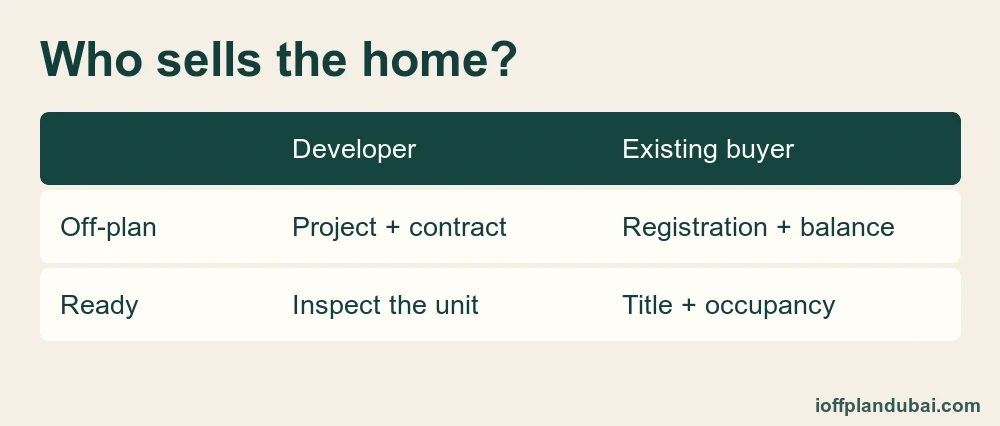
If you’re comparing off-plan vs ready property in Dubai in November 2026, ask two questions: is the home finished, and who’s selling it? Off-plan and ready describe the home. Secondary means you’re buying from an existing owner or buyer, which can happen before or after construction finishes.
Off-plan vs ready property: which documents come first?
Picture two neighbours buying identical apartments in the same unfinished tower. One signs with the developer. The other buys from someone who reserved early and now wants to sell. Both neighbours have to wait for their homes. Only the second has to reconcile what a previous buyer paid and what that buyer can transfer.
| What you’re buying | Start with | Question to settle before paying |
|---|---|---|
| Unfinished, from the developer | Project record, sale agreement and unit plan | Which home is reserved and where do the instalments go? |
| Unfinished, from an earlier buyer | That buyer’s registration and developer statement | What does the seller receive, and how much will I still owe? |
| Completed, from the developer | Unit registration, inspection and delivery terms | When do I get access to this particular apartment? |
| Completed, from an owner | Title, occupancy details and condition report | Who can give me possession, and on what date? |
When do you need the keys? If your current lease ends before an unfinished home is due, price somewhere to live in between. If you can wait and want a particular layout or floor, the drawings and the delivery terms deserve more attention than the furniture in the show apartment.
What can you check before an off-plan home exists?
Get the project name and number from the draft agreement. Look them up in the Dubai Land Department project status enquiry. Match the phase as well as the development. A large community can have a finished block beside an empty plot. A photo taken beside the first block tells you very little about the second.
Keep the dated result alongside the developer’s proposed delivery date. One tells you what the project record showed when you looked. The other comes from your contract. If the developer reports a construction milestone, ask which building it covers. A progress update from a sales office doesn't establish that DLD inspected your apartment or that the developer can release your keys.
Read the unit schedule as if you were moving in tomorrow. Which parking bay comes with it? Does the stated area include the balcony? Is the kitchen delivered with appliances or with space for appliances? Ask the developer to mark any promise you rely on in the contract or its signed schedules. A rendering rarely answers the question that comes up when the fridge arrives.
For a first sale, DLD’s initial sale registration service puts the developer in charge of the Oqood application. DLD specifies registration within 90 days of signing the sale contract and sends the result to the purchaser by email. Give the developer an address you control. Our Oqood registration guide explains what to keep with the signed agreement.
What changes when someone resells before handover?
Ask the original buyer for their contract, registration record and a recent statement from the developer. Match the unit number and buyer name across all three. Then ask the developer directly whether this buyer can transfer the contract now, what consent is needed and how your name will replace theirs on the registration. A receipt for the first instalment answers only one of those questions.
Separate the price into money going to the seller and money still due to the developer. Suppose, purely for illustration, that the developer confirms an unpaid balance of AED 600,000 and the buyer and seller agree on AED 450,000 payable to the seller. The combined commitment is AED 1,050,000 before transaction costs. If the written offer already includes the balance, adding it again would overstate the cost by AED 600,000.
Now put dates beside the sums. Is another developer instalment due between signing with the seller and registering the transfer? Ask who will pay it and how the final settlement changes if the seller pays first. Get an updated statement just before transfer. Keep a copy of the payment schedule the developer recognises in your name.
If the seller says they can transfer after paying a particular percentage, ask for the condition for this unit in writing. Don't carry a threshold across from another developer. A seller who still owes an instalment and a seller who has met every payment date can be selling apartments on the same floor.
Does a ready property mean you can move in straight away?
You can inspect a finished home. You still need to establish who holds the keys. Ask whether it’s vacant, occupied by the owner or let to a tenant. If it’s let, request the lease, payment record and any notices through the seller. Budget on the documented position. A seller’s expected move-out date is a poor basis for booking movers or giving up your present lease.
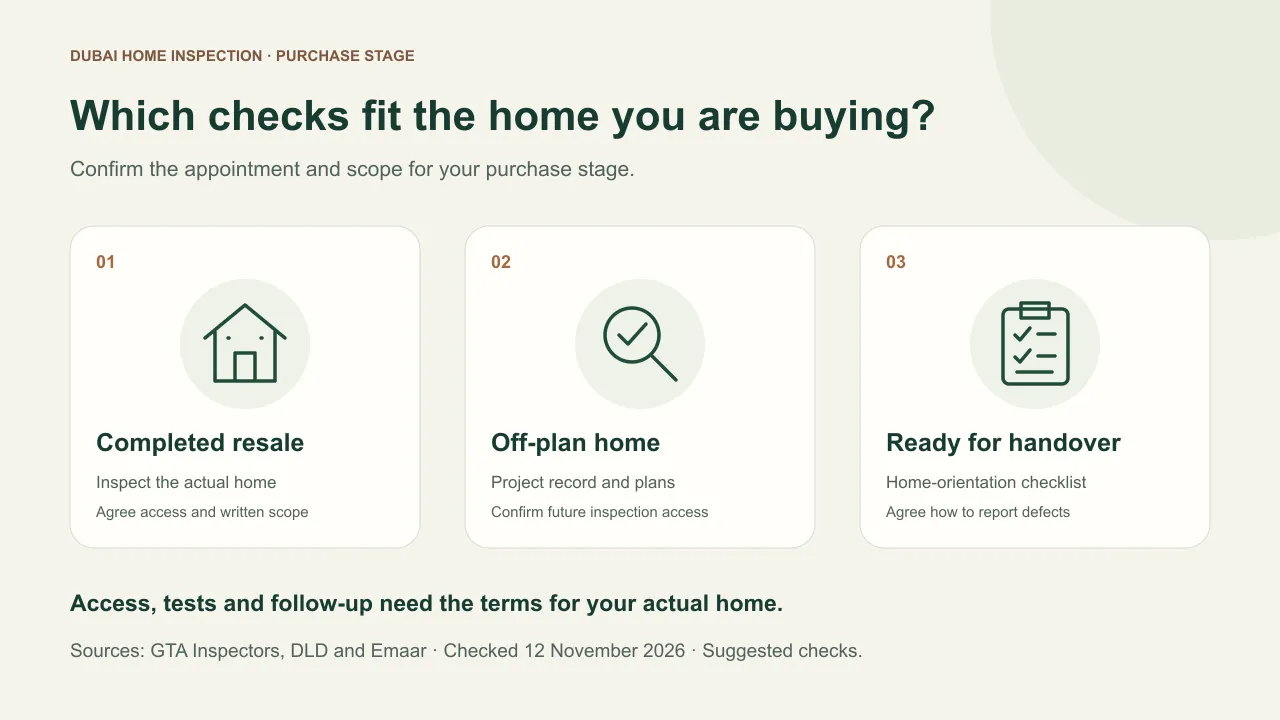
Visit the actual unit, including its parking space and store if one comes with it. Try the route from the bay to the lift. Check doors, water fixtures and cooling with permission, and ask for access to anything the viewing missed. Use the pre-purchase inspection guide to agree what the inspector will cover and what needs a specialist.
For a completed sale, review DLD’s property sale registration requirements. The department specifies a developer electronic no-objection certificate for freehold areas. Ask who will arrange it and how the parties will deal with any outstanding amounts. If a bank is involved on either side, have it confirm the sequence before agreeing a transfer appointment.
Which purchase leaves enough cash on hand?
Compare the same dates for both homes. On one sheet enter cash needed at signing, by the proposed move and after you move. Include registration, any financing costs, temporary accommodation, fitting out and ongoing building charges. Keep refundable sums in a separate column. You need the cash available, even though you may get it back.
For the initial sale service above, DLD lists 2% of sale value for the seller and 2% for the purchaser, with other charges listed separately. Ask for an itemised quote for your transaction and read how the contract allocates payment. A quoted percentage doesn't tell you the entire amount to have available on signing day.
If you’ll borrow, take the unit and payment dates to the lender. Ask what it can finance, when it can release funds and what you have to pay from savings before that happens. A post-handover instalment in the developer’s proposal belongs on the sheet even if it falls well after you collect the keys. For a ready home, include any repairs you’d need before it’s comfortable to occupy.
What happens to the reservation money if the purchase stalls?
Ask for the refund terms before you pay anything to hold the unit. Write down the exact event that would release the money: a lender refusing finance, a transfer consent falling through or the seller missing the agreed date. Does the signed document cover that event, and whom do you have to notify?
For a developer sale, verify the project payment instructions independently with the developer and check the project escrow details against the official record. For a resale, ask the trustee to explain who will hold each sum while registration is outstanding. Keep the receipt beside the document that says when the holder can release it.
Is a new or resale home better for rental income?
Work from the earliest date you can actually let the unit. For an unfinished apartment, allow for delivery, inspection, furnishing and finding a tenant. For an occupied resale, read the current rent and payment dates, including any adjustment due between buyer and seller. The resale and existing tenancy guide covers the tenant's position when ownership changes.
Compare income after the costs you’ll bear. Ask for the latest statement on a completed apartment and use the service charge guide to check the building and charge year. For a home on plan, label any budget an estimate and ask what it includes. Leave rent and future sale price open where you have no evidence. Neither the age of a home nor an early reservation guarantees appreciation.
FAQ
Can a never-occupied apartment be a secondary sale?
Yes. A buyer can own a completed apartment and sell before anyone moves in. Ask who owns it and inspect its condition. Find out when equipment warranties started, where the documents are and who can still report outstanding defects.
Should I choose off-plan if the first instalment is smaller?
Compare the largest payment you’ll have to meet, as well as the first. Check whether your savings or lender can cover it on the contractual date. If paying it depends on selling another property first, work out what happens if that sale takes longer than expected.
What if the offer says “ready soon”?
Ask for the present registration, the written handover terms and confirmation that you can inspect the exact home. Until you have a possession date you can rely on, keep the cost of your current accommodation in the comparison.
Sources
- Dubai Land Department — Register the initial sale — dubailand.gov.ae · checked
Developer application, provisional register, 90 days from contract signing and fees in AED and percent of sale value.
- Dubai Land Department — Property Sale Registration — dubailand.gov.ae · checked
Completed-unit registration and freehold developer e-NOC.
- Dubai Land Department — Project Status Enquiry — dubailand.gov.ae · checked
Project lookup by name or identifier. No individual project or completion date assumed.
Next stepDue diligence →
More in Due diligence
Start here: Due diligence
- Can You Sell Off Plan Property Before Completion in Dubai?
- Terms and conditions for using our Dubai property guides
- Dubai Real Estate Escrow Requirements (Buyer Checklist)
- MOU in Dubai Real Estate: Form F Signing (Checklist)
- What If You Find a Unit Size Difference at Handover?
- Oqood Dubai Registration: Fees & Certificate (2026 Update)