Lawn amphitheatre in Dubai: how to choose a nearby home
Buying beside a lawn amphitheatre? Use the Nad Al Sheba Gardens example to check bedroom windows, guest access and event-night routes before reserving.
Buying beside a lawn amphitheatre in Dubai? At Nad Al Sheba Gardens, Meraas describes an outdoor space for performances and private functions. Before you reserve, put the stage, the audience exit and your bedroom window on the same plan. Checked 19 November 2026.
Looking for The Paragon in Business Bay? The old feature page named that building. IGO’s Paragon project page describes an indoor cinema and a squash court. Before choosing a unit for outdoor performances, ask management to mark the lawn and stage on the current plan. Nad Al Sheba Gardens is a separate development where the developer explicitly describes an events lawn.
What is a lawn amphitheatre like at Nad Al Sheba Gardens?
It's an outdoor gathering place where people can watch a performance from the landscaped grounds. Meraas's Nad Al Sheba Gardens community page mentions live music, stage performances, weddings and presentations. If you like the idea of walking home after a show, find out who gets an invitation and which gate you'll use.
Meraas also illustrates the space in its Phase 8 brochure. The drawings show where an audience might sit. For the next actual performance, you'll need a programme. Ask for the community calendar if the venue is operating, or the expected opening phase if it’s still to come.
| What matters at home | What to mark on the plan | What to ask |
|---|---|---|
| Listening from the garden | Stage and garden boundary | Which way would a visiting act face? |
| Getting a child to sleep | Bedroom windows and nearest exit | Where do people wait for a lift home? |
| Joining a performance | Your front door and resident gate | Does this gate stay open after a show? |
| Having friends over | Guest entrance and drop-off | Can guests attend or only visit your home? |
Which homes face the stage, and which face the way out?
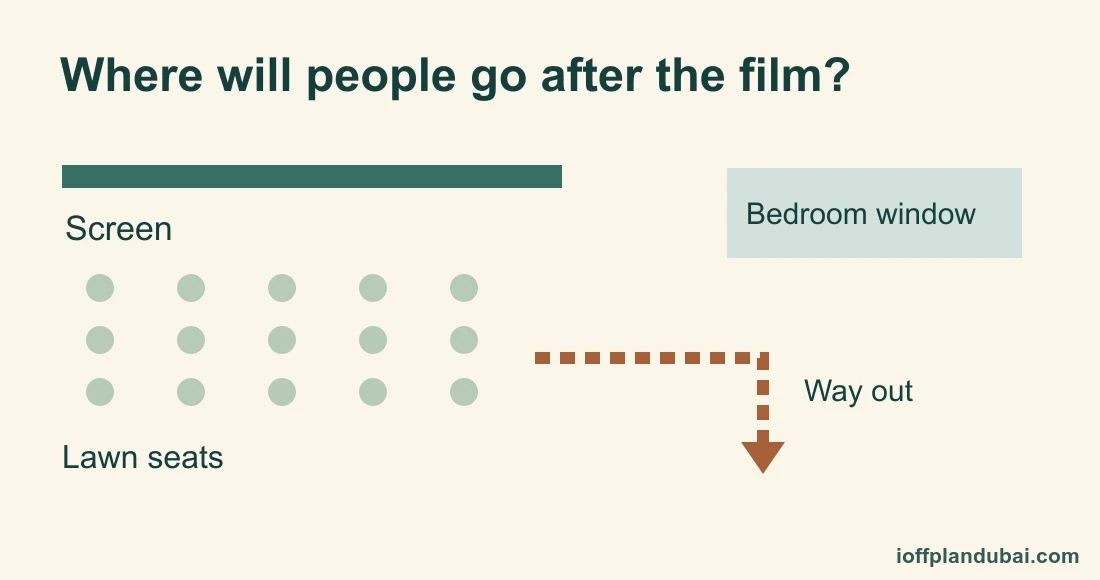
Ask for a dated plan with your plot number on it. Find the front door first. A plot behind the stage may look sheltered until you notice its garden backs onto the path people use on their way out. Another home may face the lawn across planting but have its bedrooms on the far side. Sketch where you would sit outside and where you would sleep.
Use the floor plan to check which rooms actually have the view. If the sales drawing puts a sofa beside a tall window, look for the same window on the elevation for your unit. Check whether it opens onto your own terrace or looks across a shared walkway. For a ground-floor home, ask what separates people walking to the lawn from someone sitting down to dinner outside.
Compare the same details on a second home even if you like the first. Write “bedroom faces exit” or “garden gate on separate lane” rather than giving each plot a score. An owner who wants to watch an evening performance from the terrace may choose differently from someone who sleeps during the day. The podium gardens guide has a similar plan check for windows beside shared landscaping.
How far is the walk on an event night?
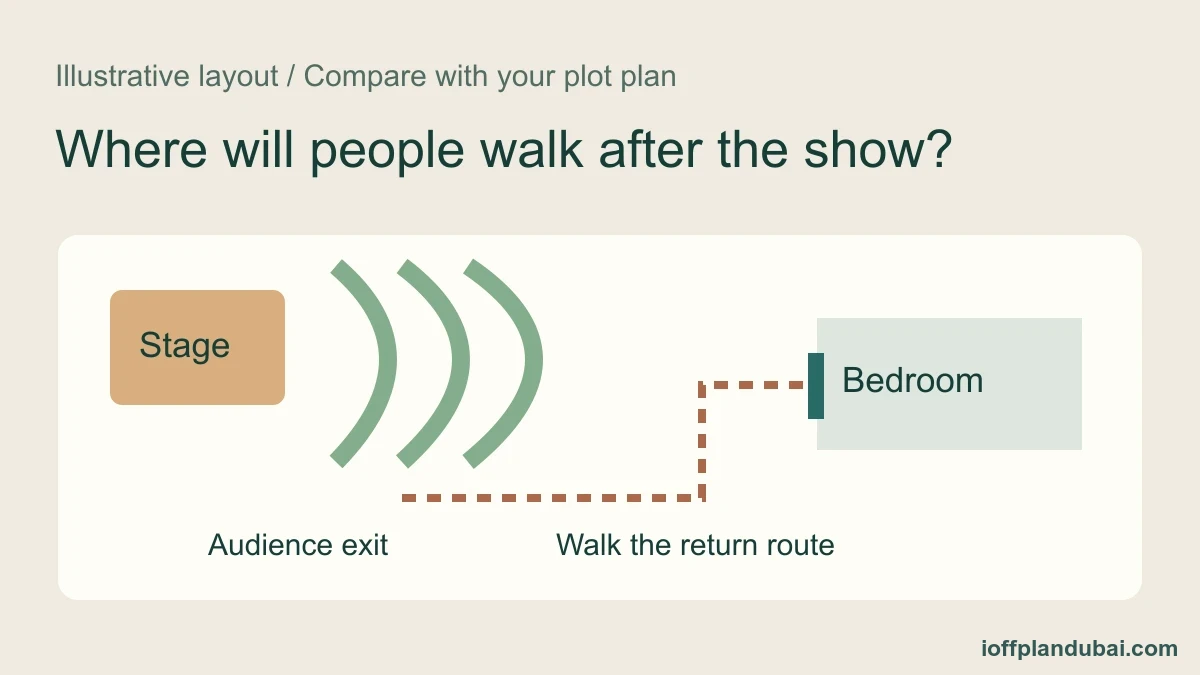
Trace the route in both directions. On the way there, start at the entrance your household would normally use. On the way back, assume you're leaving with everyone else. Check whether the quickest line crosses a private garden, a service road or a gate you can't open. A sales map with a dotted path may leave out the part you most want to know about.
If a parent will use a wheelchair or you'll be pushing a buggy, ask management to mark the step-free route, the surface at the lawn edge and a place to sit with your group. Ask about the return journey after dark. The nearest accessible seat is of little use if the gate beside it shuts before the audience leaves. Request a drawing if the route isn't yet open for a visit.
A comparison to try. Imagine choosing between a home across the lawn and one a street farther back. The first has the better view on paper. The second has a single continuous footpath to the audience entrance. If your family would go together but leave early with a child, the home farther away might have the easier walk. Test that on the actual drawing rather than judging it by the distance between two pins.
Can residents book the lawn for a wedding or birthday?
Meraas mentions weddings as a possible use. Before you plan one, ask who takes bookings, who can apply and whether an invitation can include someone who lives outside the community. If the space is open, request a sample hire agreement. If bookings haven't started, leave the date and hire price open.
Ask where a private booking begins and ends. A couple might have permission to use the stage while the surrounding path stays open to other residents. If privacy matters, get the marked boundary. Ask who controls guest entry, where deliveries stop, where suppliers can unload, and when they must take equipment away. A finish time for music might still leave people moving chairs near your home.
For a budget, request the total in AED for your intended date and the number of guests. Separate hire from staff, equipment and cleaning. If a deposit appears, ask what gets returned, when and to whom. If guests will use a separate entrance, check whether the hire includes someone to staff it. Ask when the deposit is due and whether it comes back to the resident or to the event organiser. The shared annual bill is a separate question for the owner's service charge guide.
What can you learn about noise before choosing a plot?
If a performance is scheduled and visits are permitted, arrange to see the home during setup or as the audience leaves. Start in the room where noise would matter most to you. Close the window, then open it as you normally would. Step into the garden afterwards. Write down what you could hear in each place and whether the sound came from the stage, the service area or the road.
One quiet viewing on a weekday tells you how the home felt on that visit. Ask management when amplified events last took place and how far ahead residents get notice. A named date is more useful than “occasionally”. If the venue hasn't opened, ask who will decide the permitted hours and whether you can see the proposed rules before paying.
You may prefer the sound of a performance to the headlights of arriving cars. On the plan, follow the last turn before the drop-off. Look for bedrooms or terraces facing that turn, and ask where taxis wait once the event ends. The outdoor cinema guide covers the same question for a screen near a home, including which details you can check against a published programme.
Will the amphitheatre open when you receive the keys?
Find your phase on the sale agreement and the lawn on the master plan. Ask the developer to identify, in writing, which phase delivers the venue, who will operate it and whether your phase can use it when it opens. Keep the revision date of the drawing with the reply. Another phase can have the same project name on the cover.
Use Dubai Land Department's Project Status Enquiry for the registered project. You can search by project number, name or land number. Compare the result with the details in your sale papers. A completion percentage for the project can't tell you whether the stage has been fitted out, the gates are open or bookings have started.
If you're buying in Nad Al Sheba Gardens Phase 6, take that phase's documents to the meeting. Ask the developer to point to the clause or attachment that deals with your right to use shared amenities. If immediate access makes a difference to what you'd pay, compare the home on its own merits until you have an answer that applies to your plot.
FAQ
Is the amphitheatre open to the public?
The community description gives examples of events. It doesn't publish a general admission policy. For a particular performance, ask the organiser if a non-resident needs an invitation, a ticket or a named guest pass, and which entrance the pass opens.
Will the lawn be free to use between events?
Ask management about everyday use as well as reserved dates. You may want to sit with a book or walk across the grass after dinner. Ask specifically about setup days and grass maintenance, when that part of your usual route could be unavailable.
Does a lawn-facing home come with a reserved seat?
Ask where the seating entitlement is written if it's part of an offer. A view from your garden, admission to the grounds and a seat at a particular performance are three different things. Find out whether residents need to reserve a place alongside their guests.
What should I take to the reservation meeting?
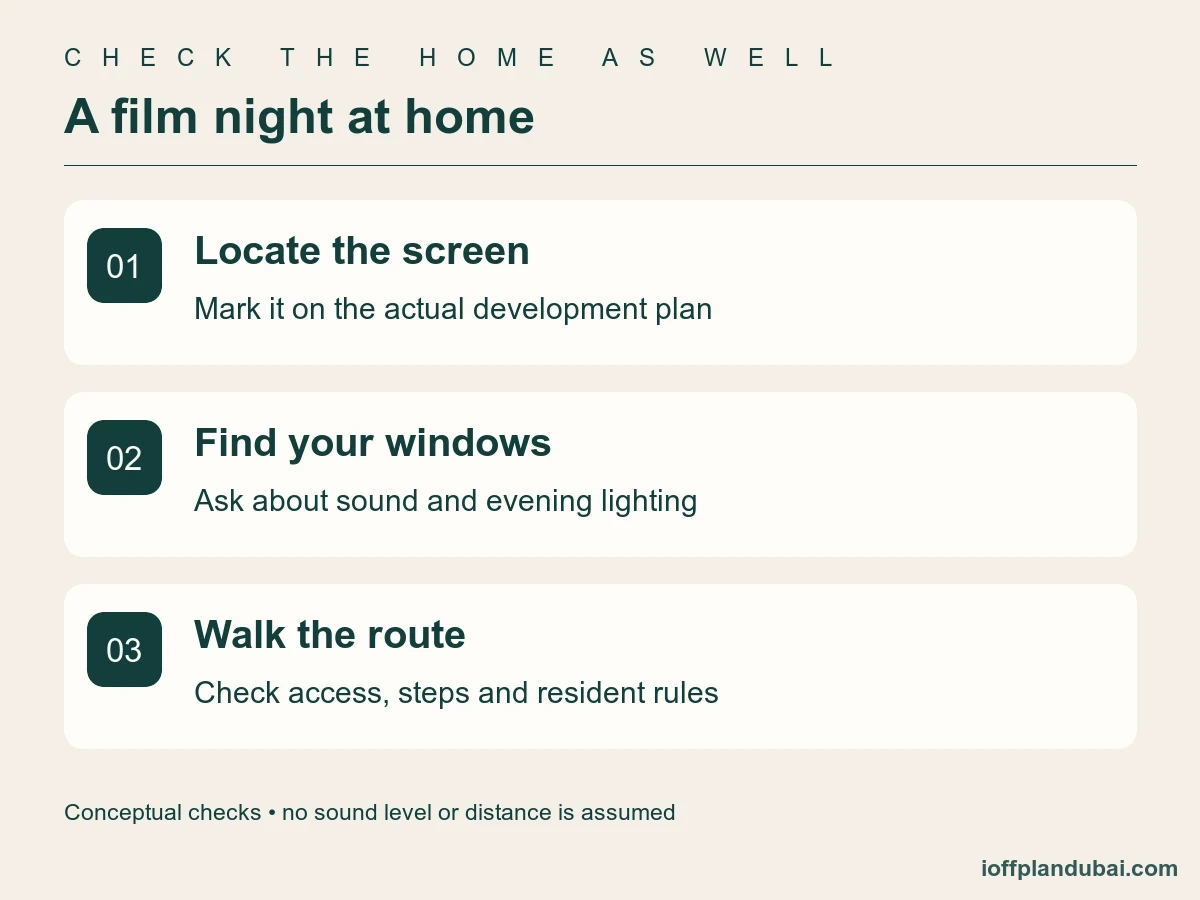
Bring the floor plan for your home and the master plan showing the lawn. Circle the bedroom, the audience entrance and the route between them. Ask the developer to mark corrections on your copy and identify the dated document that confirms when your household can use the venue.
Sources
- Meraas — Nad Al Sheba Gardens — meraas.com · checked
Community description names an events lawn and amphitheatre and gives examples of intended uses. No event frequency or unit-specific views confirmed.
- Meraas — Nad Al Sheba Gardens Phase 8 brochure — meraas.com · checked
Illustrated amenity in the phase brochure. No measured sound level, bookable date or opening time established.
- Dubai Land Department — Project Status Enquiry — dubailand.gov.ae · checked
Lookup by project name, number or land number. Completion percentage applies to the matched project.
- Invest Group Overseas — The Paragon by IGO — theparagonbyigo.com · checked
Business Bay project page describes an indoor cinema and squash court. It supplies no lawn venue schedule or operating hours.
Next stepDAMAC Hills Dubai: area and buyer guide for 2026 →
More in Areas
Start here: DAMAC Hills Dubai: area and buyer guide for 2026
- Dubai Creek Harbour Apartments: Pros, Cons and Costs
- Living in JLT Dubai: Pros, Cons and Costs (Checklist)
- Dubai Sports City: living and buyer checks in 2026
- Business Bay Dubai: Metro, Costs and Buyer Checklist
- Dubai Internet City Metro and nearby homes (Commute Guide)
- Jumeirah Garden City: Master Plan and Location (2026)