Residents’ lounge at Palm Beach Towers: who can go up?
Is the residents’ lounge at Palm Beach Towers open to your dinner guests? Check the lift, terrace, table booking and charges before buying.
The residents’ lounge at Palm Beach Towers 3 is a sky lounge. As of November 2026, Nakheel also describes rooftop dining and viewing areas at the development. Ask management whether your guests can go upstairs and how to reserve a table.
Where is the residents’ lounge at Palm Beach Towers?
Start with the tower name. Nakheel’s Tower 3 launch announcement includes a sky lounge among the amenities residents will have access to. If what you want is a comfortable place for visitors to wait before you come down, ask to see the entrance lobby as well. The two spaces serve quite different visits.
The May 2026 Podium Villas announcement describes a rooftop with dining and viewing areas at Palm Beach Towers. That release concerns homes across Towers Two and Three. Neither announcement identifies a restaurant operator or gives guest prices. Use the dated amenity plan to identify the actual room available to the home you’re considering.
| What you want to do | Ask to see or check |
|---|---|
| Read alone after work | Seating away from the dining tables and any event calendar |
| Bring relatives up for the view | Visitor entry rules and the lift from reception |
| Have dinner together | Table reservations, food arrangements and charges |
| Use it while renting out the home | Who holds the access card during the tenancy |
Who can take the lift upstairs?
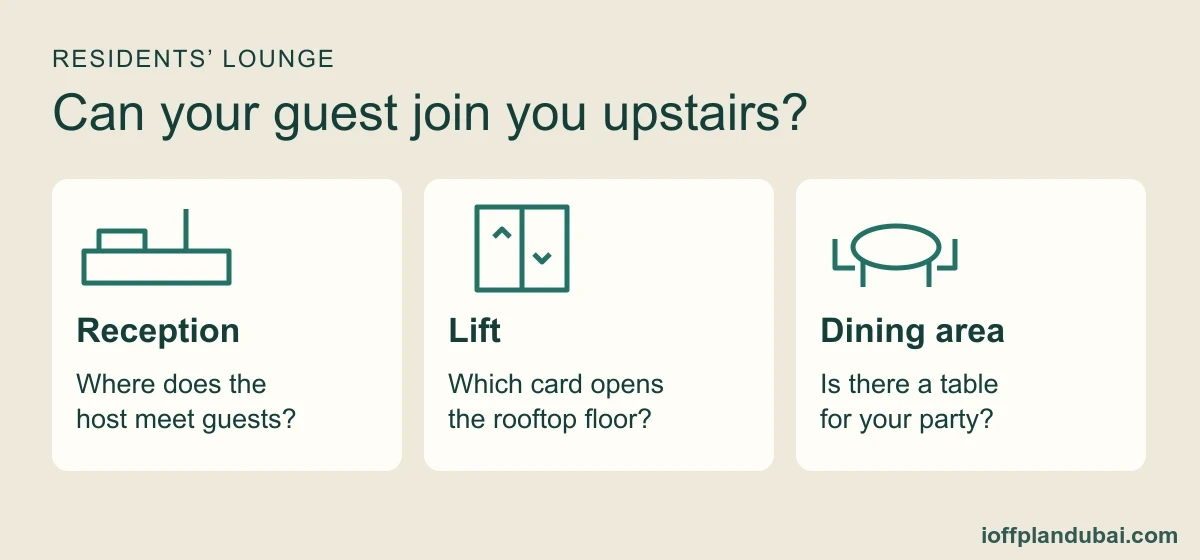
Ask management to trace the journey of a first-time visitor. Where does the taxi stop, at which reception does the visitor give your name, and who releases the lift? A view from the roof is less convenient for hosting if you must come all the way downstairs each time a guest arrives. That may be fine for dinner and awkward for a succession of short visits.
Then trace your own journey from the apartment door. Look for a tower change or a second lift bank. If one lift serves the roof only during particular hours, ask how residents get back down after the last booking. For someone who avoids steps, include the threshold onto the viewing terrace and the route to an accessible washroom. A lift symbol on a floor plan answers only part of that question.
The Palm Beach Towers 3 buyer guide explains how to match the tower and apartment to the sale papers. Use the same identifiers on your access enquiry. “Can residents use the roof?” invites a general answer. “Can the tenant of this Tower 3 apartment bring their parents up on a Saturday evening?” is much easier for management to answer precisely.
Can you dine there or just take food upstairs?
A dining area tells you there’s space intended for a meal. Ask how a meal actually arrives. Does an operator take orders at the table? Can a resident carry up food from home? Where would an outside delivery stop? If you want to host a dinner, the answer determines whether you're reserving a table, ordering from a menu or carrying plates in the lift.
A dinner for six. Imagine two residents inviting four visitors. Ask about four guest admissions and one table for six. Permission for four visitors to enter the building answers the first question only in part. They still need permission to use the rooftop, and six places in a shared seating area might be spread across several tables.
Ask who confirms the reservation and what that confirmation buys. One table could be held while the rest of the room stays open to residents. If you need the door closed for a family occasion, a bookable multi-purpose room may suit the occasion better. Get any deposit, minimum spend or cancellation charge in AED from the operator before sending invitations.
Will an ordinary seat be available when you want it?
For someone buying a smaller flat, the appeal may be quiet time upstairs every day. Ask for the weekly hours and a sample calendar showing how private functions affect walk-in use. A room that closes for a few hours at dinner can still suit a morning reader. It matters more if those are the only hours you get home from work.
Look at the furnishings on a plan or a permitted viewing. Which seats have backs and armrests? Can a pair sit facing each other without blocking a route to the terrace? Count the seats you would actually choose. A long bench at the entrance might look impressive in a photograph but be uncomfortable for an hour with a book.
If you plan to work there, check the rule on calls and laptops. Ask where you can charge a computer, whether the network reaches the seat and how much of your conversation carries across the room. An office lounge or shared workspace answers a different need. A dining table with a sea view tells you little about whether a confidential call will work.
What can you see from a seat?
Ask for the orientation of the occupied room. A rooftop panorama may have been taken from several points along an edge. Decide where you would spend your time. Look at the view from a chair as well as from the railing. A parapet that disappears from a standing photograph can sit directly in a seated visitor’s line of sight.
For an off-plan home, request a section drawing through the indoor seats, glazing and terrace edge. Ask which dimensions are confirmed. If the seller supplies a render, identify where the imaginary camera stands and whether residents will have access to that spot. Keep your own apartment view separate when comparing two purchase prices. A shared viewing area upstairs offers no evidence of a view from either living room.
Visit at the hour that matters if management permits it. Note where the sun reaches the glass, whether the terrace has usable shade, and whether people returning indoors pass between diners and the view. For a family member who prefers to remain inside, check whether the indoor and outdoor seats are close enough to share the evening.
What will owners and guests pay?
Request the home’s service-charge statement or, before a first budget exists, the developer’s dated estimate. Ask which costs of the common rooms it covers. Consult the Dubai Land Department Service Charge Index for the applicable property and period. Read the units on any figure before comparing it with the total on the statement.
Keep a separate line for what you spend while upstairs. A household may contribute to upkeep and still face a bill for a private function or a meal. If you're quoted a refundable deposit, ask how and when it comes back and who decides on deductions. The guide to reading a Dubai service-charge bill covers the annual property side of that comparison.
If a seller puts a value on access, try the comparison with your own plans. Suppose you expect to host one dinner a month but would never pay to hire a whole room. Ask for ordinary table terms, not an exclusive-hire package. Until you have the right quote, leave that cost open. A price per event and a price per guest produce very different bills.
Can the people who need a seat use the terrace?
Imagine one of your dinner guests uses a walking frame. Ask where they can leave the car, whether a companion can ride up beside them and how far it is from the lift to the table. A photograph of level flooring indoors won't show a raised track at a sliding terrace door. Ask for a side view of that threshold if the building is still off-plan.
Once upstairs, check whether a chair can pull back without narrowing the walkway. If the terrace closes in bad weather, is there an indoor seat with the same outlook? Those details can decide whether a parent joins dinner or goes home after a few minutes.
What should you keep before signing?
Keep the plan with the tower, floor and revision visible. Save the rules for residents and visitors with the date supplied. If the room has yet to open, ask who expects to run it and when the operator will publish hours and tariffs. A brochure can establish what the developer describes even while a practical detail such as dinner service is still undecided.
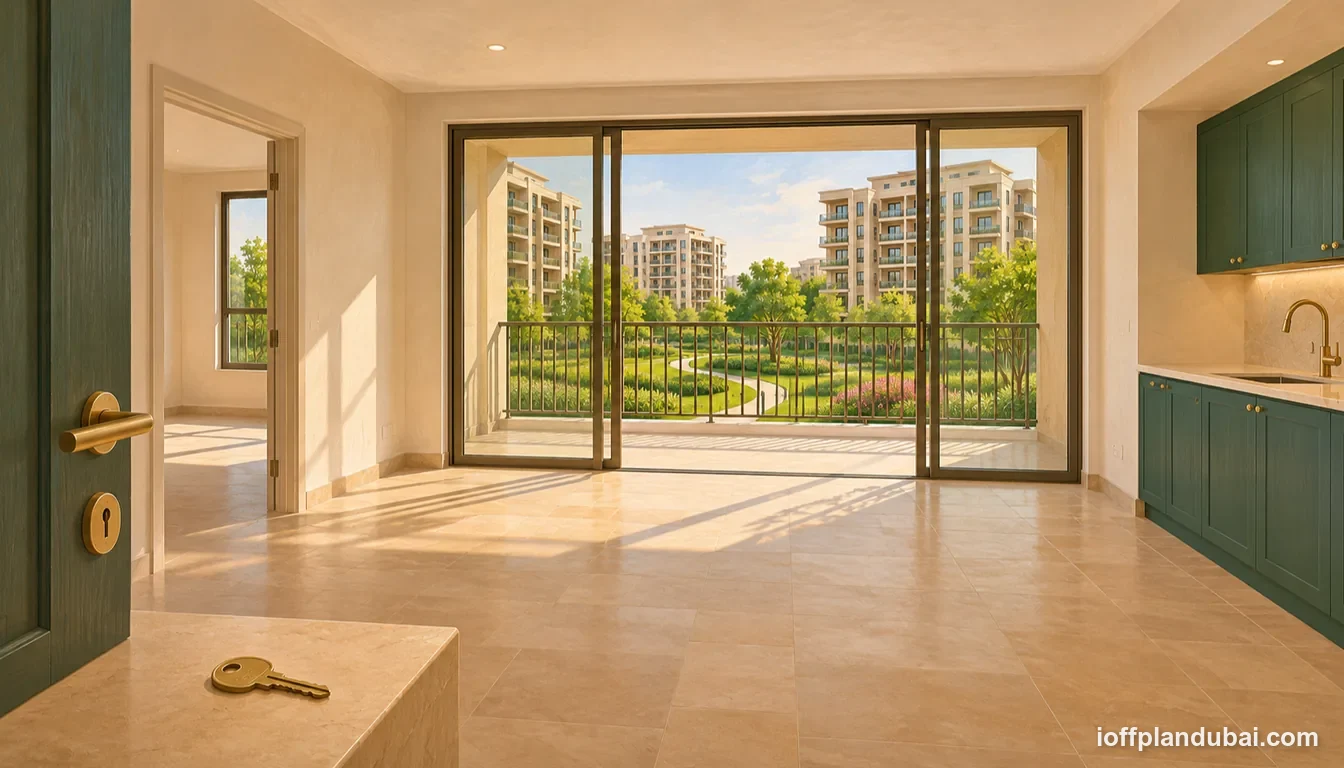
At handover, try the route with the card issued for the apartment, if management has opened the facility. Record the exact point where access stops if the lift or a door doesn’t work. Ask management whether it’s a card setting, a temporary closure or a restriction for the apartment. Those answers lead to different next steps.
FAQ
Is the sky lounge a public restaurant?
Nakheel describes it as a resident amenity and separately mentions dining areas. Those descriptions give no public restaurant opening hours or booking channel. For dinner with someone who doesn't live there, ask the operator about resident-hosted visits and food service.
Can I book the view for a private event?
Ask which space is available for exclusive hire and whether the viewing terrace stays open to other residents during the event. If privacy matters, get a plan with the reserved area marked. A table confirmation alone leaves the rest of the room shared.
Does a landlord keep access when a tenant moves in?
Get the building’s current card policy before making a promise in the lease. Ask how management registers the tenant, whose old cards are disabled and whether an owner visiting during the tenancy must enter as a guest. Keep the written answer with the apartment’s handover records.
Sources
- Nakheel — Palm Beach Towers 3 launch, October 2022 — nakheel.com · checked
Tower-specific description names the sky lounge. No timetable or visitor terms.
- Nakheel — Palm Beach Towers Podium Villas, 19 May 2026 — nakheel.com · checked
Development description identifies rooftop dining and viewing areas. No restaurant service or room hire price specified.
- Dubai Land Department — Service Charge Index — dubailand.gov.ae · checked
Official service for checking a property and charge period. No project rate or amenity tariff quoted.
Next stepBest places to work remotely in Dubai (4 Area Checks) →
More in Living in Dubai
Start here: Best places to work remotely in Dubai (4 Area Checks)
- Dubai Water Canal living: pros and cons (Checklist)
- Laundry and dry cleaning services in Dubai residences
- Leisure pool deck in Dubai: what comes with your flat?
- Malibu Beach at DAMAC Hills 2: who can book a swim?
- Palm Monorail in Dubai: stops, fares and the last train
- Picnic pavilions in Dubai: can you book the whole shelter?