Office lounge in a Dubai home: who gets the room key?
Buying a Dubai home with an office lounge? Check which door is yours, where visitors wait and whether a shared desk will work on a busy morning.
Buying a Dubai home with an office lounge in November 2026? Ask the seller to mark the room on your floor plan. At Casa Serene, GRID describes a private office and a separate majlis for business visitors. In an apartment building, the desk you’ve seen may be in a shared clubhouse.
Which office lounge comes with the home?
Start at the front door on the drawing for the home you’ve chosen. Can you walk to the desk without leaving your own space? If you cross a common corridor, go down in a lift or use a second access card, ask management who else can enter. That answer matters more on a working Monday than the number of chairs in the picture.
| What you need | Ask to see | What to look for |
|---|---|---|
| A desk you can leave set up | Dimensioned villa or apartment plan | Space for your chair to pull back while the door opens |
| Somewhere to receive a visitor | Entrance level with the guest route marked | A place to wait and a bathroom reachable without crossing a bedroom |
| A quiet seat away from the flat | Clubhouse plan and operating rules | Which rooms take bookings and where calls are allowed |
| A place for a private conversation | An enclosed room on the plan | A closing door, a reservation in your name and room for both people |
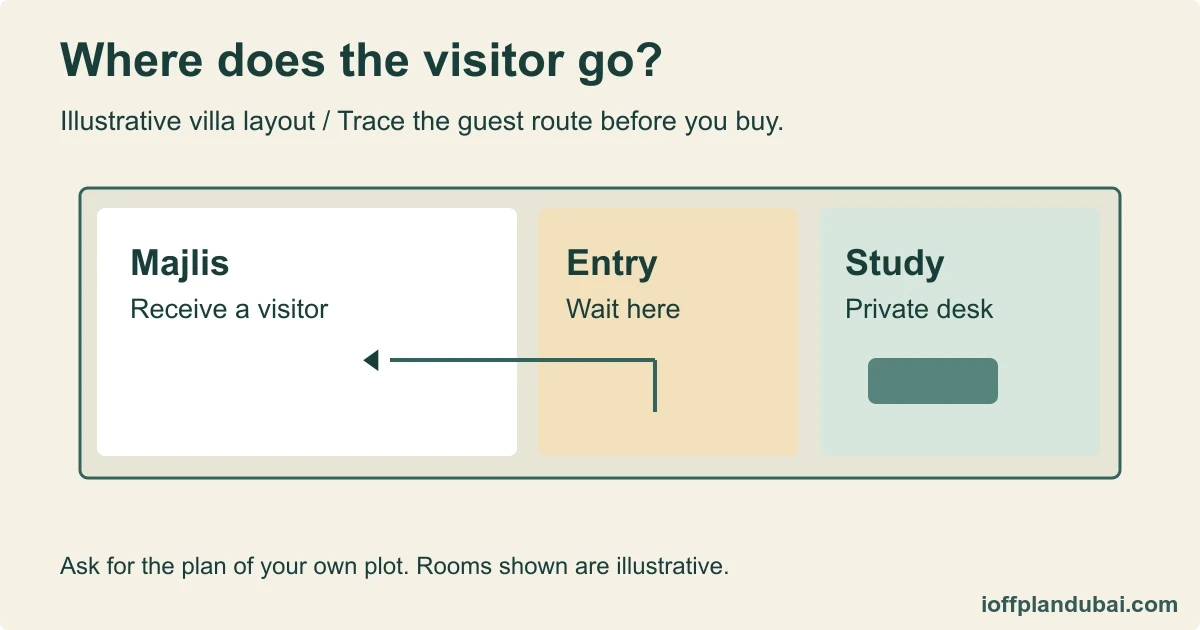
GRID’s description of Casa Serene names the office and the majlis separately. A majlis is a reception room. If you want somewhere to greet a colleague while your papers stay behind a closed door, ask to see both spaces on the drawing for your plot. The Casa Serene villa guide explains how to match that drawing to the home being sold.
For an apartment example, Ellington’s Eltiera Views announcement places coworking on the ground floor of its clubhouse and the social hub on the floor above. That tells you which floor to ask about. It leaves the arrangements for your weekly client meeting open.
Will your desk actually fit?
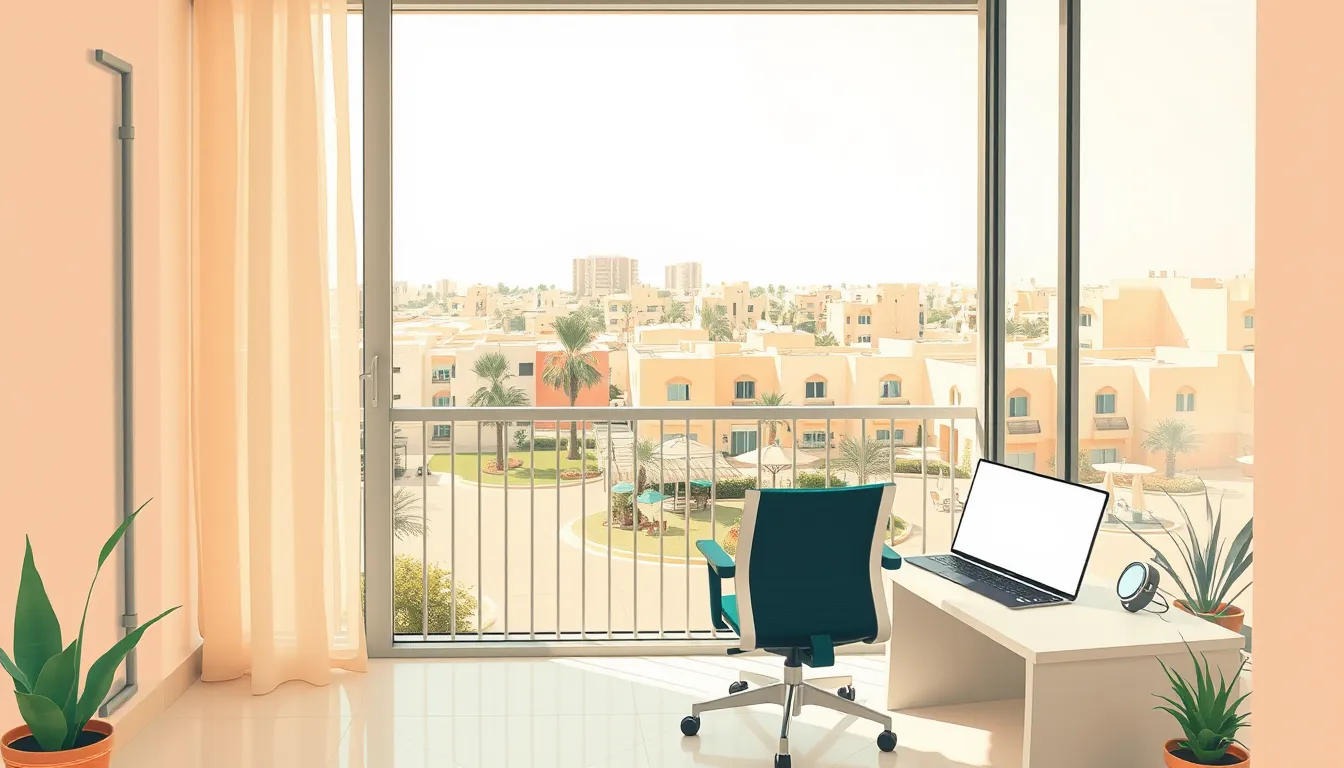
Take the dimensions of the desk you use now, including any monitor arm projecting behind it. Draw that footprint on the proposed office plan. Leave the chair where it sits when you stand up. Can someone still open the door, reach the window and get to a socket without moving the furniture? If the drawing has furniture but no scale or dimensions, ask for the measured version.
What’s behind your chair? On a video call the camera faces that wall, so a door there may put everyone who enters the room on screen. A window behind the desk can put glare directly on your monitor. At a finished home, sit facing the way you intend to work. If the window has blinds, try them with the lights on before deciding where the screen belongs.
For an off-plan home, find the electrical and data points on the fit-out drawing. Ask which points come fitted and where the connection enters the home. A socket across the room may be fine for charging a phone but awkward for a permanent desk. Keep the fit-out specification with your signed plan if you’re relying on it to avoid work after you move in.
Where does a visitor go while you’re finishing a call?
Trace a guest’s first visit from the allowed drop-off to the seat where you’ll meet. In a villa, check whether you can open the front door, seat your visitor and return to the study without walking them past a family sitting room. Then trace the route to the guest bathroom. A separate reception room is more useful if the rest of the house can carry on around it.
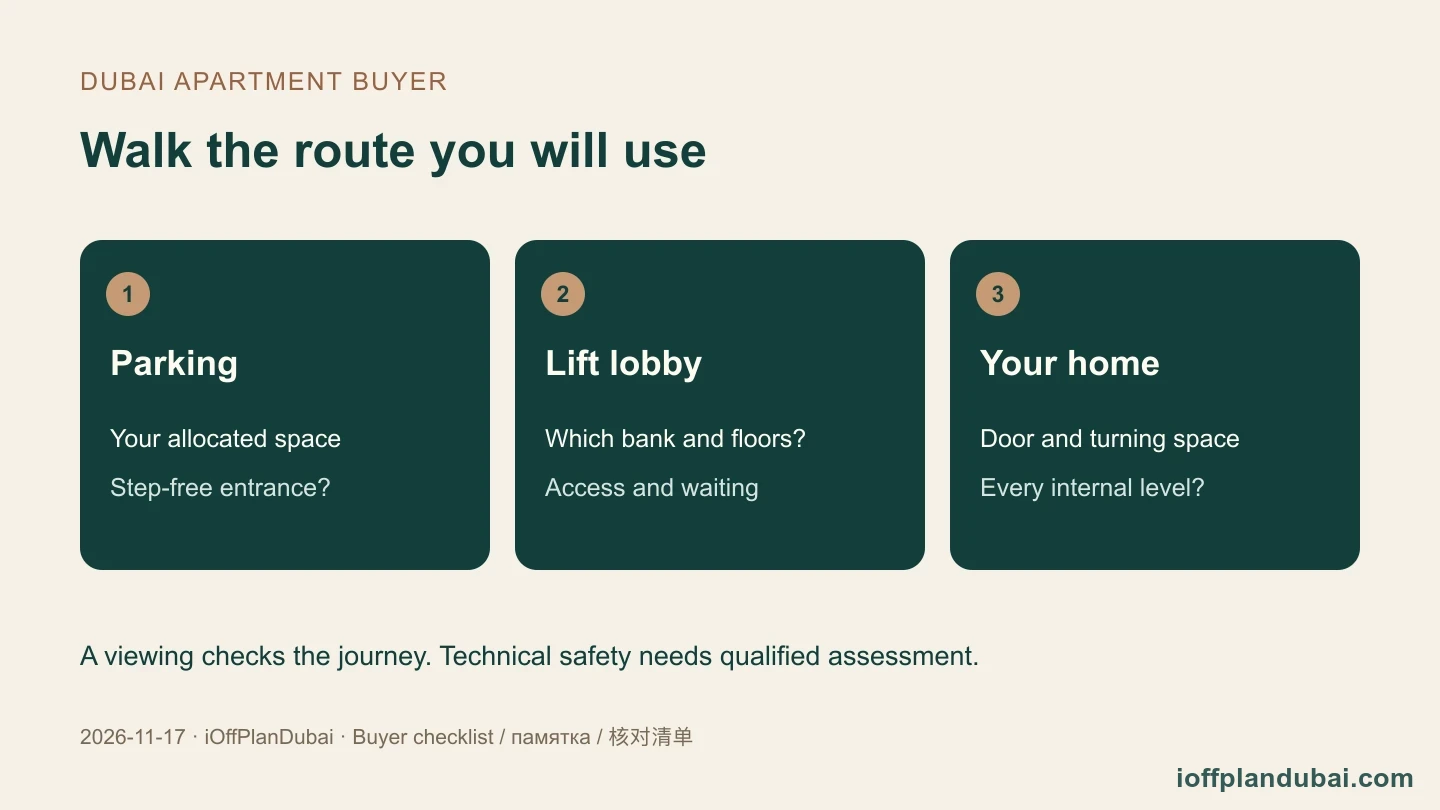
At an apartment, start the route at reception. Ask who registers the visitor, whether you must meet them downstairs and whether an invitation covers the lounge floor. See the resident lift access checks if a guest needs a card between floors. For someone who uses a wheelchair, check the actual entrance and the turning space beside the meeting table together. A step-free lobby only gets you part of the way.
Describe your proposed visit plainly. “I’d like to meet one colleague here on Tuesday mornings. Can I invite them, and do I have to stay with them from reception to the exit?” Keep the building manager’s reply. If client appointments are essential to your work, ask separately about the permissions for your activity before giving anyone the residential address as a place of business.
If your guests are staying for dinner, check the residents’ lounge guest and table arrangements separately. A desk reservation needn’t include a dining table.
Can you hear the meeting from the next chair?
Treat an open lounge as a place you share with whoever else comes in. At a viewing, ask a companion to sit where the next user would work while you speak at normal volume. Use an ordinary sentence. If they can repeat it, keep private conversations for somewhere else. A headset helps you hear the other person but people at the table can still hear your side.
An enclosed booth is worth trying from inside and outside with the door shut. Listen for voices through the door, an air vent over the desk or noise from a coffee counter. Then sit in the booth long enough to judge the light, airflow and seat. A place that works for a quick call might be uncomfortable for an afternoon of interviews.
Test the internet in the seat you expect to use, with permission, on the resident network if it’s available. Try the tasks you actually do, such as joining a video call while opening a large document. Note the room, time and device. A sales office demonstration on another network gives you little to go on. Where the building is unfinished, ask who will run the network and keep a home connection in your budget.
Can you reserve the same time each week?
Ask management to show you a sample week with residents’ names hidden. Look for time limits, how far ahead a room opens for booking and what happens when someone runs late. The desks might be open all day while the only enclosed room takes short bookings. If your work comes in blocks, look for one continuous slot that covers setup as well as the meeting.
Suppose you run interviews on two consecutive mornings. You want to leave your monitor overnight, close the door for each interview and admit a second interviewer who lives elsewhere. Make three separate entries on your comparison sheet. A shared desk might meet the seating need while failing the storage or visitor check. A lockable cupboard can solve the first problem. It won’t give your colleague access to the building.
If the room is full, where will you work? The Dubai guide for remote workers can help you judge the trip to another place to work. Try that trip at the time your first appointment starts. If reaching a bookable room means leaving home before the school run, a closer alternative may matter more than a larger clubhouse.
What if two people work from home?
Put both diaries side by side for an ordinary week. Mark the calls that need a closed door and look for overlaps. If one person expects to use the clubhouse, ask whether they can get back into the flat between meetings without cutting across the other person’s camera. In a villa, try closing the study and reception doors at the same time. Check whether the person in the reception room can still reach the kitchen without walking through the study.
What should you settle before paying for the home?
Ask for a dated copy of the plan that identifies the room and the document that says who can use it. For a private study, check the room boundary and what furniture comes with the sale. For a shared facility, get the access arrangements for your building and ask who can change them. If a decisive promise appears only in a message, ask the seller to identify it in the papers you’ll sign.
Separate the cost of keeping the building running from anything a resident pays for exclusive use. Ask for the current schedule, including the unit of charge, such as per room per hour, and who collects it. The Dubai service charge guide explains what to compare in the building budget. Neither developer description above gives a booking price for your meeting.
FAQ
Can I count a shared lounge as a second bedroom or study?
Keep it separate when comparing floor plans. An extra room inside the home is available when someone else in the household needs it. For a clubhouse, write down the hours and access you can confirm. Compare the two homes on a day when both people need a quiet room at once.
What if I rent the flat out?
Ask management which person can activate the booking account during a tenancy and whether the owner retains access. Get the answer for your building before describing the amenity to a tenant. Tell them separately if visitors need approval or enclosed rooms carry a booking charge.
What should I take to handover?
Bring the signed layout, socket locations and any included furniture schedule. Open the office door with the chair pulled out. For a shared room, ask the handover team to show you how a resident gets in and makes a booking. Record anything you couldn’t test and who will arrange a return visit.
Sources
- GRID — Casa Serene design description — linkedin.com · checked
Developer identifies a dedicated office and a majlis for business visitors. No plot-specific dimensions.
- Ellington Properties — Eltiera Views announcement — ellingtonproperties.ae · checked
Developer places coworking on the ground floor of the clubhouse. No booking tariff or operating hours.
Next stepDue diligence →
More in Due diligence
Start here: Due diligence
- Dubai Metro station access from home: time the real walk
- Multi-purpose room in Dubai: can you host a private lunch?
- Nursery near your Dubai home: how to confirm a place
- Open spaces in Dubai: how much ground can you actually use?
- Outdoor cinema in Dubai: film nights near your next home
- Outdoor gym in Dubai: will the fitness station suit you?