Picnic pavilions in Dubai: can you book the whole shelter?
Picnic pavilions can be shared even when a gathering is approved. Check the booking, guest limit and cooking rules before choosing a Dubai home.
Picnic pavilions give residents a sheltered place to eat together. If you’re choosing a Dubai home in November 2026 because you want to host lunch there, ask management one question before you pay. Can your household reserve the whole shelter, a single table or simply permission to meet in the park?
What do picnic pavilions include in a Dubai development?
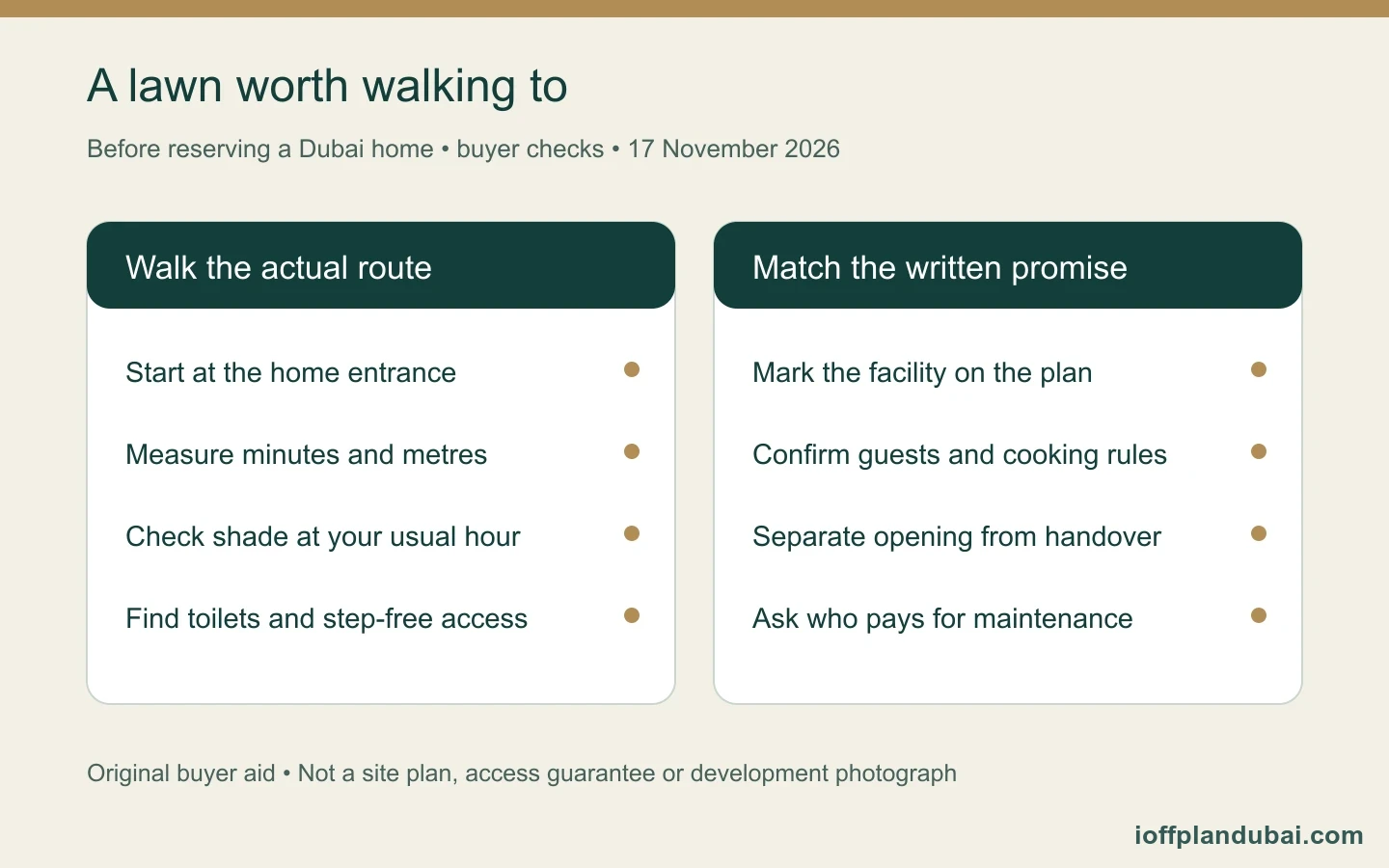
Start with the name on the park plan. Meraas names picnic pavilions at City Walk alongside lawns and an events arena. Ask Meraas to mark the entrance and shelter serving your building, then request the access terms for that phase.
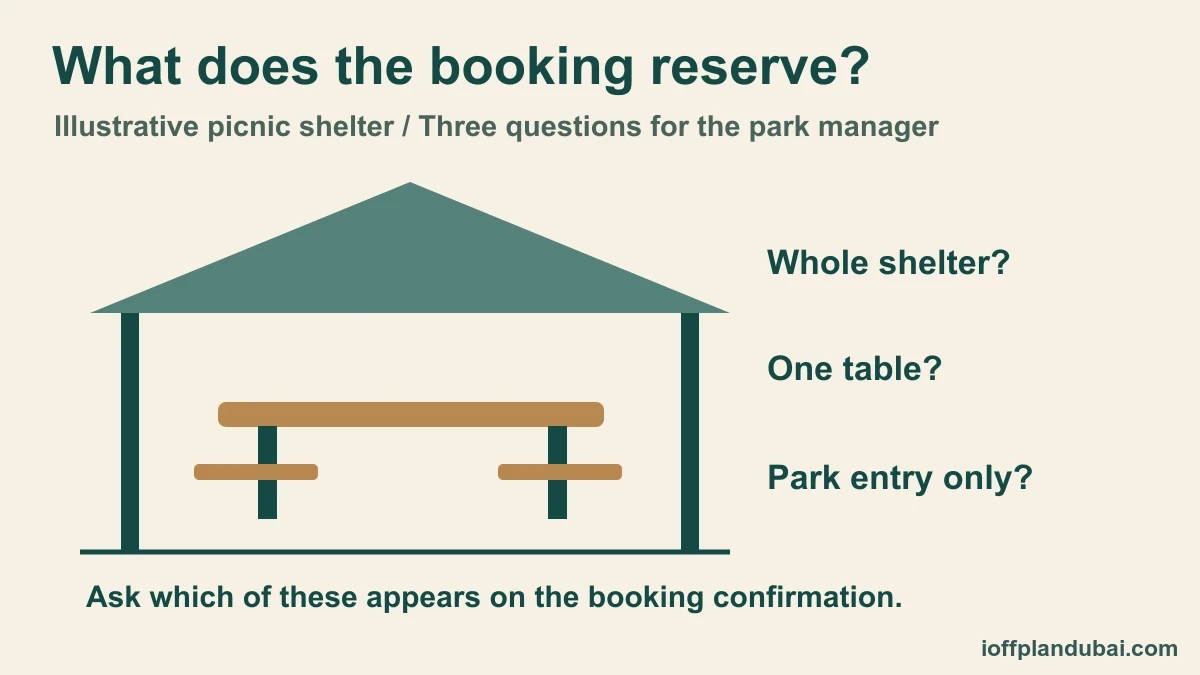
A pavilion usually suggests overhead cover. Check how far the roof extends past the table, whether there are sides, and which seats have a backrest. If you’re picturing an indoor party room with cooling and a kitchen, ask to see the equipment schedule before treating the two facilities as interchangeable.
| Your plan for lunch | The detail that decides it |
|---|---|
| Invite family for a meal at one table | Whether the table can be held for the group |
| Serve food prepared at home | Where you can unload, carry and set down dishes |
| Cook for your guests | Where cooking is allowed and what equipment is supplied |
| Host a birthday under cover | Permission for the gathering and exclusive use of the shelter |
| Bring someone using a wheelchair | An open table end with space to approach and sit with the group |
For the broader question of eating outside on a lawn or shared terrace, use the picnic area buyer guide. With a pavilion the important extra detail is what happens when another family turns up at the same shelter.
Can you reserve a pavilion for a private gathering?
Ask to see what a successful booking looks like, with residents’ personal details removed. Look for the pavilion identifier, the date, the start and finish times and the wording about who can use it. If the confirmation simply permits a gathering in a park, ask whether other residents can sit at the next table or take any open seat.
A real example comes from Emaar Community Management’s Reem party rules. Its FAQ allows private functions of up to eight guests at the park nearest the host’s unit. Larger groups need prior permission from the community manager. The manager encourages residents to get in touch at least one week ahead and says it cannot reserve an area exclusively for a gathering.
Those are Reem’s arrangements. At another development, give the manager the same practical example. Suppose ten guests will join you for lunch. Ask whether the host and children count towards the limit, which seats you may occupy and whether two guests arriving later can still get in. A yes to the party tells you little about who gets a chair unless you ask both questions.
If you need somewhere indoors when the weather changes, ask whether you can reserve the multi-purpose room for the same guests. A pavilion booking alone leaves that open.
How many people can sit together under cover?
Count places at the table you’ll use. A drawing showing several benches across a park can make it look as if one large family could eat together. Check whether the benches are fixed, which tables share one roof and whether moving furniture is allowed. If half the group would sit with their backs to the others, ask whether a different shelter has a more suitable layout.
Try the end seat. Can a guest pull in a wheelchair or bring a high chair up to the table without blocking the aisle? Look below the tabletop as well. A fixed crossbar or a bench running the full length can make an otherwise roomy end hard to use. Ask for clear measurements if you can’t visit and compare them with the space your guest actually needs.
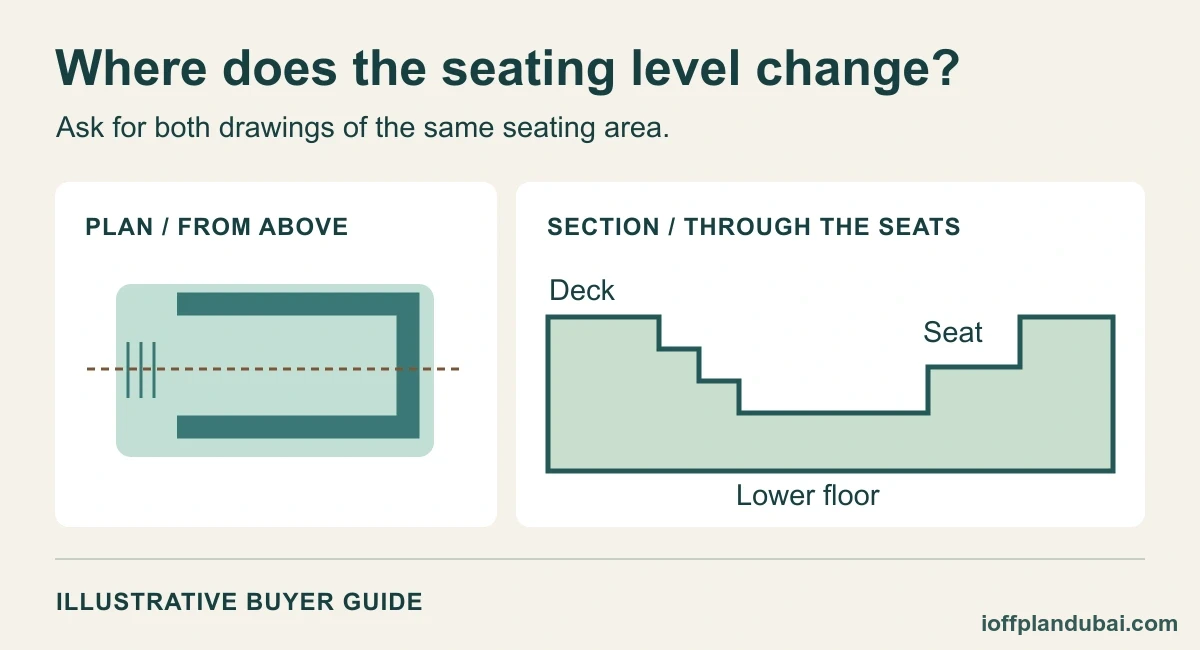
Look at shade where the plates will sit. A high roof with open sides may leave an end table exposed to low afternoon sun. At a viewing, note the time and which seats are shaded. On a plan, ask for orientation and a drawing showing the roof edge. A nearby sunken lounge might provide seating for coffee after lunch, but check the steps and table height before counting it as dining space.
Can you cook or bring food from outside?
Tell the manager what you intend to serve. For sandwiches and a cake, you might only need a clean table and permission to bring your own food. For a hot meal, ask whether you can use the pavilion, have to use a separate barbecue station or must bring everything ready to eat. Get the rule for the specific shelter you’ll use.
Follow the journey of one serving dish. Where can you set it down while opening the gate? Is there a sink with water suitable for the intended use, or will you bring your own water? Where can you take the used serving trays at the end? If the cooking area is some distance away, walk that route with the guest who would be carrying the food.
If your plan depends on electricity, ask which outlets residents may use and for what equipment. The Reem FAQ says its community parks have no electrical sockets and rules out equipment needing extension leads. A light fitting above the table doesn’t tell you there’s a usable outlet for a food warmer. Ask separately whether a caterer may enter and where a delivery can be collected.
What could a family gathering cost?
Get the manager’s current schedule in writing. Put the booking fee, guest charges and any cleaning charge on separate lines. For each, write down what triggers it. A per-event amount and an amount per guest will behave very differently if relatives join at the last minute. Ask who pays if another park user leaves something behind in a shared shelter.
The Reem rules say management may require a deposit and hold the host responsible for costs arising from damage or cleaning. They give no deposit amount in the cited FAQ. In your building, ask how much would be held in AED, what condition you need to leave the pavilion in, who checks it and how you’d get the money back.
For the annual cost of owning the home, request the current maintenance budget. Check the project, usage and budget year in the Dubai Land Department Service Charge Index. The community fees guide can help you read the recurring costs. A charge for a private booking belongs in your entertaining budget and could have a different payer if a tenant lives in the apartment.
Would your guests reach the table comfortably?
For a pavilion inside a park, locate the pedestrian gate first. Walk from the point where a visitor may actually be dropped off. A pavilion close to the apartment on a map can still have its guest entrance on the far side of a fence. Find out where you’d meet a guest who arrives after everyone has started eating. If the resident has to escort each arrival, it helps to know that before picking the shelter furthest from the gate.
From the table, locate the nearest toilet guests can use. Check whether a visitor would need your access card to return and whether the facility stays open through an evening booking. A grandparent accompanying a child shouldn’t have to go back to your flat every time someone needs to wash their hands.
Then walk the return route when you expect to finish. Look for lighting on the path to the gate and check the last time you may collect belongings. If setup and clearing up have to fit inside the booked slot, an afternoon slot that looks long on paper may leave little time at the table. Ask for the earliest permitted arrival and the time you must hand back the space.
What should an off-plan buyer check before reserving the home?
Ask the developer which building or phase includes the shelter, what the sale documents promise and which manager will set booking rules. A master development can have several residential projects. If you’re considering Central Park Plaza at City Walk, use its project guide for the apartment checks and ask separately about access to the particular park facility.
If the operator hasn’t issued rules yet, write down the decision that depends on them. For example, you might still buy a home with a shared pavilion for casual lunches, but choose another apartment if your main reason for buying was a place to hold private family occasions. Keep exclusive use open as a question until you have a written answer.
At handover, find the pavilion on the signed plan and ask how to register for access. If the shelter is physically finished but bookings haven’t opened, note both facts. Ask who will issue the first operating notice and where residents can see it. Keep that contact with the plan so you know where to go when you’re ready to invite people.
FAQ
Does a pavilion booking include the barbecue?
Ask for the cooking station number and any separate reservation terms. A shelter can be available while a shared grill is already booked. If the two facilities have different time slots, check that you can cook and serve the meal in the time available.
Can a resident invite guests without holding a party?
Describe the gathering, including the number of visitors and whether you want to keep seats together. Ask who can admit guests for an ordinary meal and when the manager needs a formal request. Use your own building’s rules for the answer.
What if the pavilion closes on the day?
Read the cancellation terms before booking. Ask whether management offers another shelter, moves the date or refunds a charge, and how you’d receive the message. If the group needs a step-free route, check that any replacement table works for the same guests.
Sources
- Meraas — City Walk — meraas.com · checked
Developer names lawns and picnic pavilions at City Walk. No unit entitlement or pavilion tariff given.
- Emaar Community Management — Reem parties — ecm.ae · checked
Park functions up to eight guests, prior permission for larger groups, one week of suggested notice and no exclusive reservation. Conditions specific to Reem.
- Dubai Land Department — Service Charge Index — dubailand.gov.ae · checked
Project, usage and budget-year search. No project rate or separate amenity tariff quoted.
Next stepBest places to work remotely in Dubai (4 Area Checks) →
More in Living in Dubai
Start here: Best places to work remotely in Dubai (4 Area Checks)
- Residents’ lounge at Palm Beach Towers: who can go up?
- Malibu Beach at DAMAC Hills 2: who can book a swim?
- Palm Monorail in Dubai: stops, fares and the last train
- Podium gardens in Dubai: which level is your window?
- Pool deck with private loungers in Dubai: whose seat is it?
- Public Buses in Dubai: Routes, Fares and Times (2026)