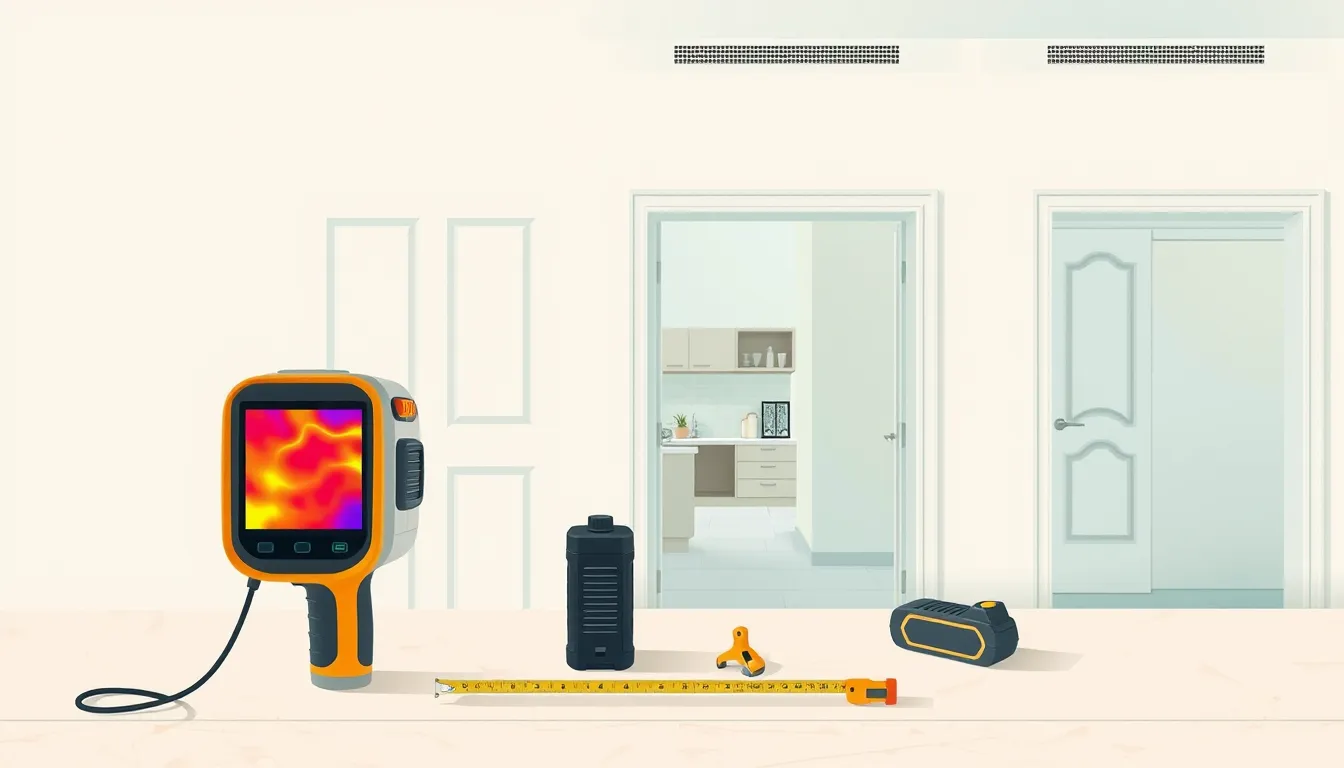
Dubai handover snagging checklist, room by room
Walk your Dubai apartment room by room, test doors, taps and cooling, and leave handover with a numbered snag list and a way to recheck repairs.
Use this snagging checklist before you sign the handover inspection sheet. Start at the front door, work through each room, and try the fittings with the developer's representative present. For every fault, write down where it is, what happened and the photo number. Mark anything you could not test. Leave with a copy of the list, a repair contact and a date to follow up.
Sources checked 20 November 2026 · the iOffPlanDubai team.
Pack your snagging checklist before the visit
Bring your signed floor plan and finishes schedule, a charged phone, a tape measure, a small torch and a few dry tissues. Ask whether power, water and cooling will be available. If someone else will inspect for you, confirm in advance what authority or ID the developer requires. The handover notice guide covers the other documents to check when the invitation arrives.
Set up one note on your phone with the unit number and date. Copy the room names below and tick off each as you finish. Give similar bedrooms distinct names, such as “bedroom facing the courtyard.” If a room is locked or the supply is off, record the reason beside the room and ask who can arrange access. A list of rooms you still need to see is worth taking home.
Front door, hallway and living room
- Close the entrance door from inside with the representative there. Try the handle, latch and lock, then unlock it. Note any point where you have to lift the handle or push unusually hard. Try the entry intercom with someone at the other end if the system is active.
- Walk the floor slowly. Look along the tiles or boards for chipped edges, raised corners or open joints. Mark the exact spot on the plan. “Third tile in from the balcony door” gives the repair team somewhere to start.
- Open and close each accessible window and try its latch. Look at the frame corners and seals from inside. Photograph cracked glass from a safe distance and flag it to the representative on the spot.
- With the lights on, stand at the room entrance and look along the ceiling and skirting. If you see a stain, take one wide picture that shows the wall and a closer one with the edge of the stain visible. Record what you saw without guessing where the water came from.
Kitchen and laundry
Start with the cabinets. Open the doors and drawers one at a time, including the corner unit. Then try neighbouring doors together to see whether handles collide. Compare the worktop, sink and included appliances with the finishes schedule. Record any missing item against the line where it was promised.
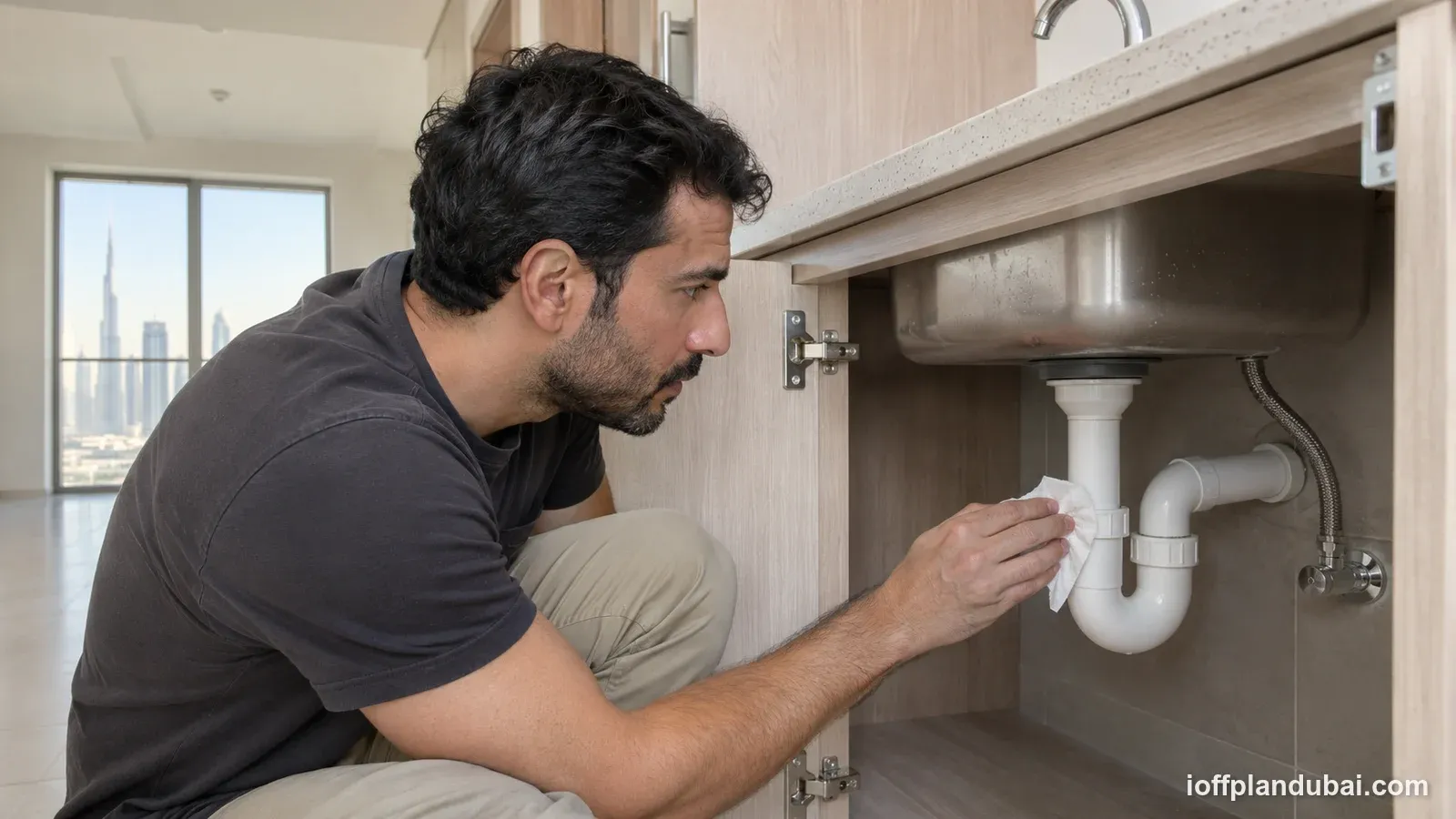
- Sink and waste pipe. With permission, run the tap and watch how the basin drains. Look inside the cupboard during and after the flow. On a dry, accessible joint under the sink, a clean tissue can show a fresh drip. Take a picture before wiping the cabinet base.
- Worktop and backsplash. Look along the joint behind the tap and around the sink rim. Note an open seam, a chipped edge or sealant that has pulled away. Name the side as you face the sink so the contractor can find it again.
- Appliances and laundry space. Ask the representative to demonstrate any included appliance that is connected. Compare model details with your schedule if it names a model. Measure the clear space for your washing machine, including the door opening. Leave unused water connections closed and ask the representative to identify them.
Bathrooms and toilets
Visit every bathroom, including the guest WC. A working basin in one room tells you nothing about the next one. Start with the floor dry so you can see where fresh water appears.
- Run each basin tap, watch the plug and drain, and look under the basin for drips. Ask the representative to demonstrate hot water where available. If the heater is off, record “hot water untested” for that bathroom.
- Run the shower briefly with permission. From outside, watch whether the water reaches the drain or travels beyond the screen. After turning it off, photograph any puddle that remains and note where it sits. Avoid flooding the floor to test waterproofing.
- Flush each toilet and watch it refill. Look around the base and exposed connections for fresh moisture. Work the bathroom door and accessible fittings, and ask for the extractor fan to be demonstrated. Report a moving fitting or a fan that rattles while running.
Bedrooms, cooling and electrics
In each bedroom, close the door, open the wardrobe and slide each drawer through its normal travel. Check the window latch again. Try the light switches, including the bedside switch if fitted. Compare the position of sockets and fittings with any positions specified on the signed plan. For an apparent size discrepancy, request the survey and use the handover unit area guide to compare measurements on the same basis.
Ask the representative to turn on cooling in each zone. Note the room, thermostat setting, whether air came from the grille and whether you heard a rattle or saw a drip. Record how long it had been running when you checked. Air movement alone cannot establish cooling performance. If the system is still being commissioned, ask for a working demonstration and put a follow-up date beside the untested room.
Leave switchboards, wiring and ceiling panels closed. If you see an exposed wire, water near electrical fittings or a damaged socket, keep clear and tell the representative immediately. Ask for a qualified technician to inspect it. Write down the location and the name of the person who took the report. Use the snagging companies guide if you need help agreeing the scope of specialist tests.
Balcony, parking and access
Operate the balcony door from inside and check its track, lock and threshold. From a safe position look for cracked glazing, a visibly loose section of guard or debris covering the drain. Leave the balcony unused if the barrier looks unsafe. Ask the representative to secure the area and record who will follow up. Keep both feet on the floor and leave work at height to the building team.
If a parking space or store is included, take the allocation document with you. Match the number and location, and try the issued access device with a representative present. Note a blocked bay, a missing key or a fob that opens the lobby but fails at the parking gate. Ask the team whether building management or the developer handles that item and get the correct reference.
Write one repair request the contractor can reproduce
Use one row for each issue. Keep the number on the photo, in your report and in any later message. Here is a fictional entry you can copy on your phone.
| Item | Place and observation | Evidence | Action and status |
|---|---|---|---|
| K1 | Kitchen, cupboard under sink. A fresh drop formed on the waste joint while the basin emptied. | Wide photo K1a and close photo K1b | Ask plumbing team to repair. Open. Repair date unknown. |
| B1 | Main bedroom. Thermostat display was off when the representative tried to start cooling. | Photo B1 beside room label on plan | Cooling untested. Ask for a powered demonstration. |
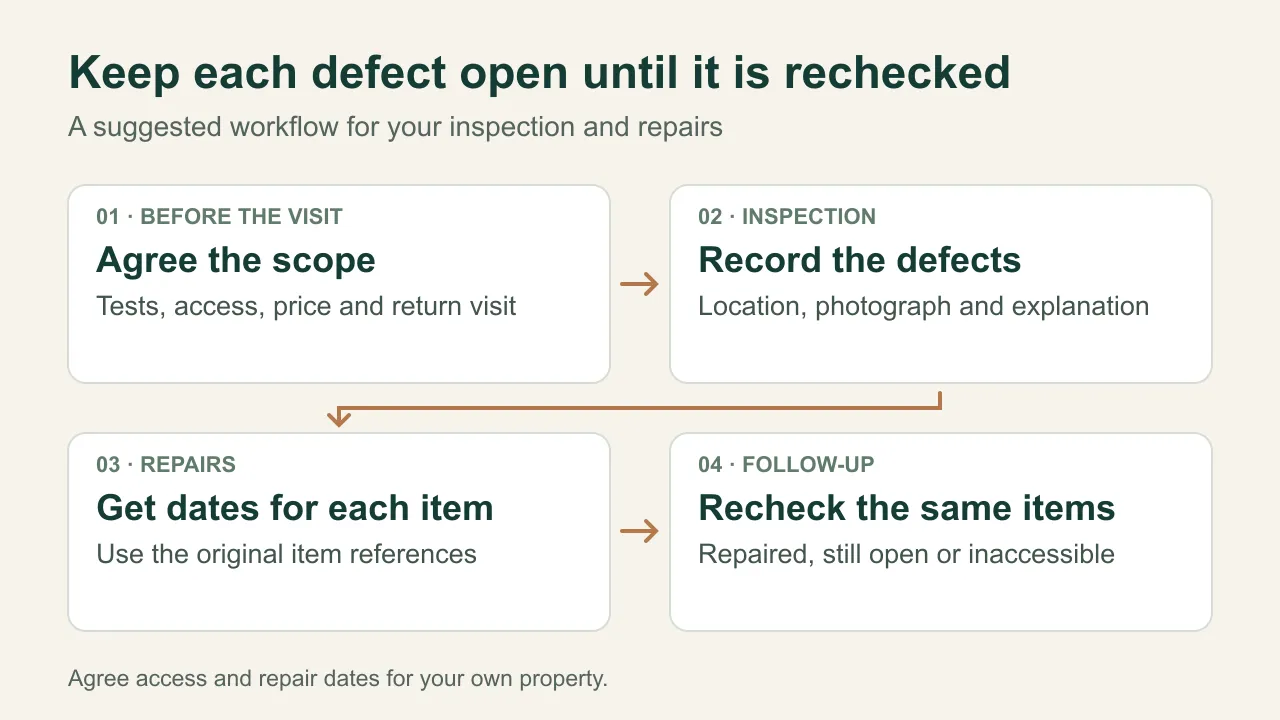
Before you leave, compare the developer's inspection sheet with your own list. Ask the representative to attach missing entries, confirm receipt and name the person handling repairs. If the sheet says all defects are closed while K1 still leaks, ask for a corrected copy showing K1 open. Check the wording of anything you are asked to sign and keep your own dated copy and photographs.
Ask how you can verify repairs. Emaar, for example, describes one orientation per unit and directs owners with outstanding snags after handover to its Property Quality Assurance team. Confirm the process for your own development. When you regain access, repeat the original check under the same conditions. If the cupboard was dry on arrival but leaks again when the basin empties, update K1 and keep it open. Emaar Home Orientation FAQ, checked 20 November 2026
What else do buyers ask?
Which dates should I keep for defects after handover?
Keep both the date of the project's completion certificate and the date you took possession. For jointly owned property, Article 40 sets a ten-year period for structural defects from the completion certificate and one year for defective installations from unit handover. If the owner refrains from taking possession, the installations period starts from the completion certificate. The defect liability period guide explains which records to keep for a later report. Dubai Law No. 6 of 2019, Article 40, checked 20 November 2026
What if the visit ends before I finish?
Give the representative the list you have and name the rooms or systems still outstanding. Ask when you can inspect them and how to add the results to the same record. Keep the inspection scope and any limits visible on the copy you take away.
What if the first photo shows the fault but nobody can find it later?
Stand in the doorway and take a second picture that includes a fixed reference, such as the window or sink. Mark the spot on your floor plan with the same item number. For an intermittent fault, add the conditions that produced it, such as water escaping only when the shower screen was closed.
Sources
- Emaar Properties · Home Orientation FAQ — emaar.com · checked
Emaar describes one pre-handover orientation per unit and a Property Quality Assurance route for outstanding snags after handover. This is one developer's procedure.
- Dubai Legislation Portal · Law No. 6 of 2019 on jointly owned real property — dlp.dubai.gov.ae · checked
Article 40 gives different liability periods for structural parts and defective installations, including a different start date for installations if the owner refrains from taking possession.
Next stepDelayed handover of property in Dubai (Action Plan) →
More in Handover
Start here: Delayed handover of property in Dubai (Action Plan)
- Property handover delay in Dubai: 5 checks for buyers
- RERA Dubai Cancelled Projects List: Check Status & Refunds
- My Dubai handover date changed: what to check
- Got Your Dubai Handover Notice? 7 Checks Before the Keys
- Defect liability period Dubai: 1-year and 10-year rules
- Property Inspection Dubai: Before You Buy (Checklist)